








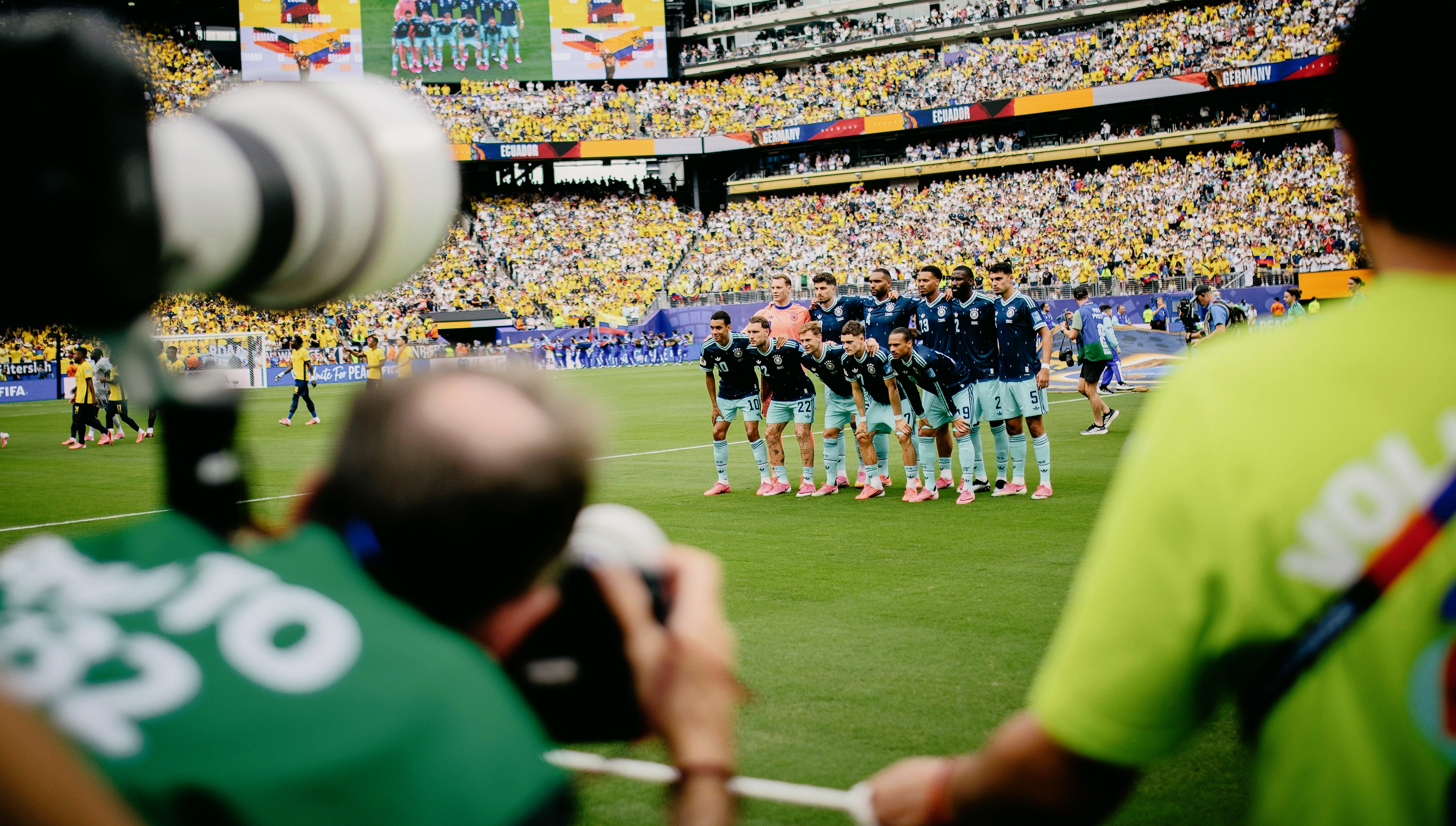
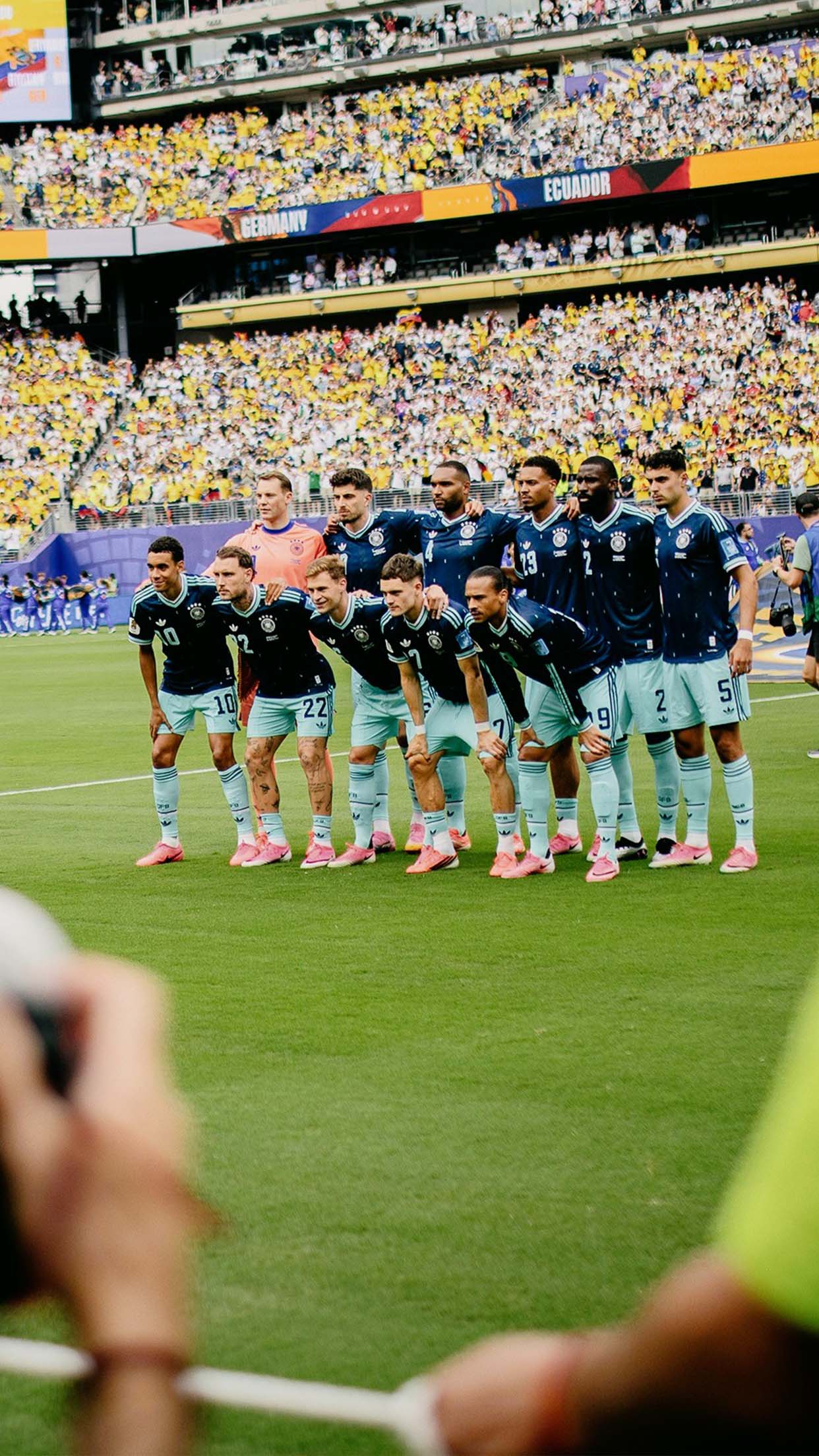












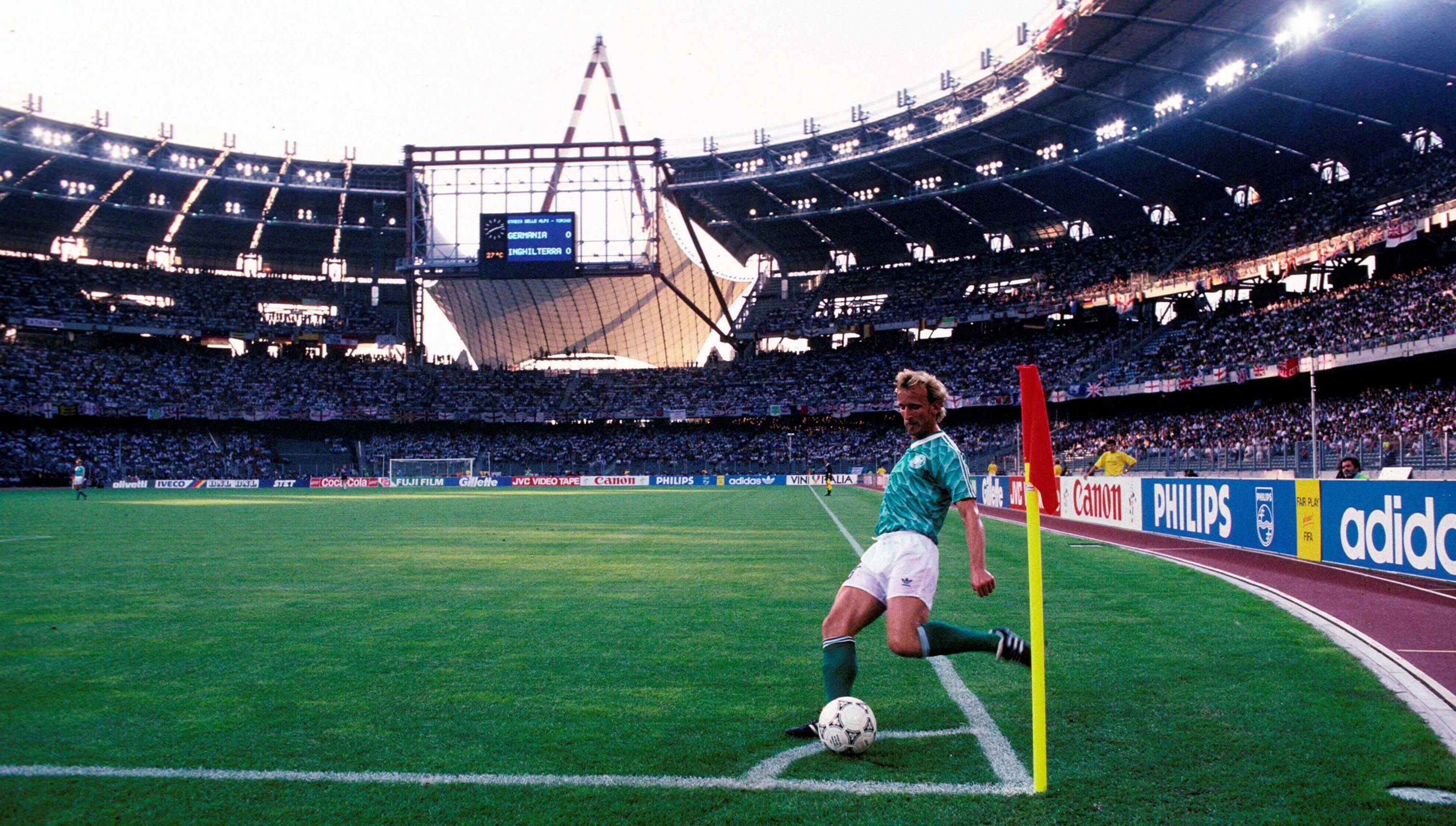
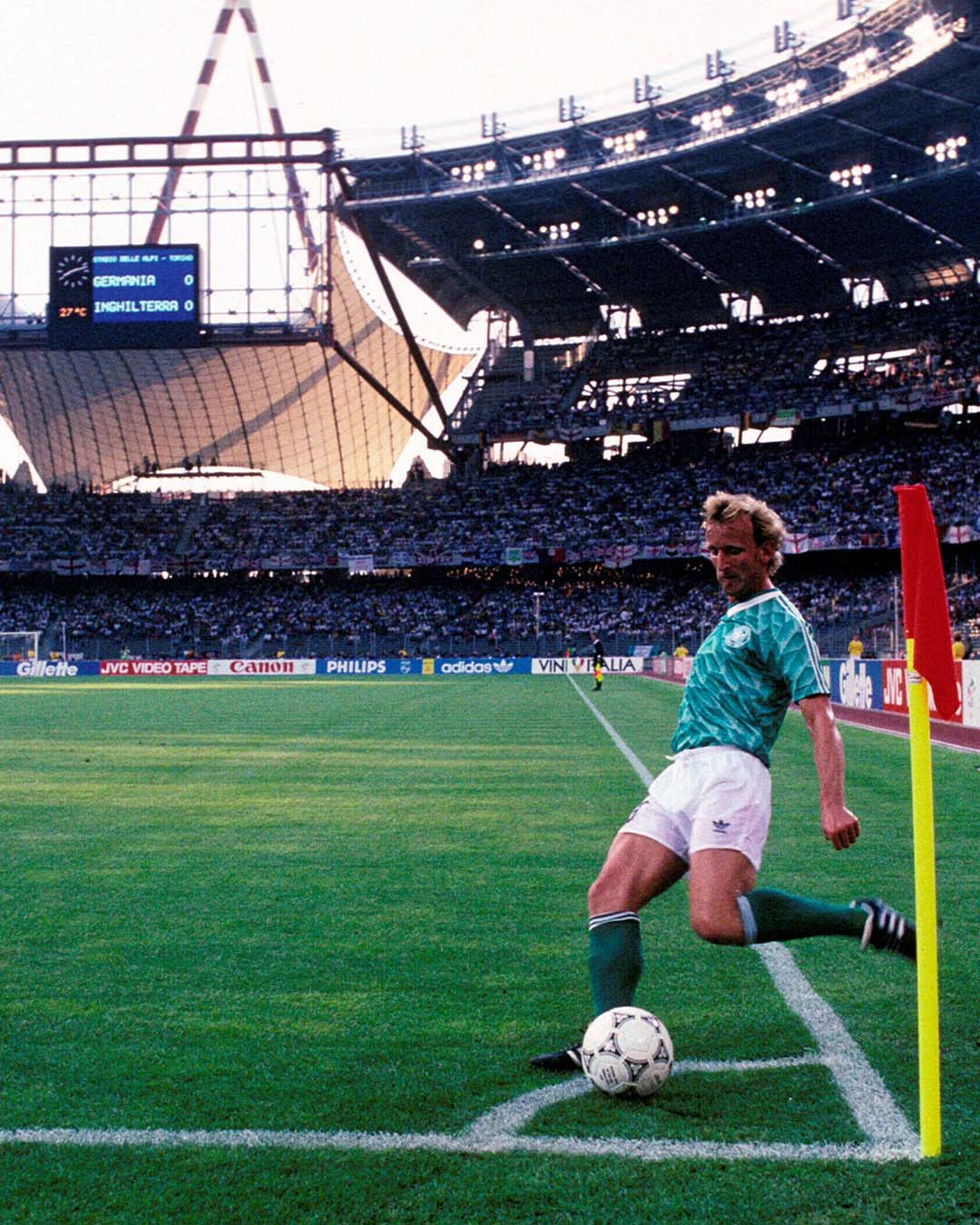





Defending champions out in the quarter-finals, Effenberg sent home early, midday heat in Dallas: the 1994 World Cup spiralled out of control for Germany. What remained is the kit – and adidas has reissued it for the 2026 World Cup.
With the „Bringback" collection, adidas is reviving legendary Germany kits for the 2026 World Cup – among them the home and away kits from 1994, the tournament last held in the USA. As a reference, the choice of location is obvious. The memory is less so.
Because hardly any German World Cup campaign stands for a bigger gap between expectation and reality than USA 94 – and hardly any kit has survived that gap so effortlessly.
USA 94: How the World Champions Lost Control
Germany arrived in 1994 as world champions, with the core of the team from Rome and Berti Vogts, for whom it was the first World Cup as Franz Beckenbauer's successor.
The conditions were uncomfortable: midday kick-off times designed for European television audiences, plus summer heat in Chicago and Dallas. On the pitch, it started sluggishly – a 1-0 win over Bolivia in the opener, a 1-1 draw with Spain.
The third group game became the tournament's defining image. Against South Korea, Germany led 3-0 at half-time in the sweltering heat of Dallas, Jürgen Klinsmann scoring twice – and ended up clinging on for a 3-2 win because the team simply ran out of energy in the second half.
Stefan Effenberg, substituted and whistled by Germany's own fans, showed the stands his middle finger. Vogts threw him out of the squad, mid-tournament. The distance between a team and its supporters can hardly grow any bigger.
In the round of 16 against Belgium, Rudi Völler – brought back from retirement by Vogts – scored twice; the 3-2 once again had more drama than control.
In the quarter-final, the end: Lothar Matthäus converted a penalty before Hristo Stoichkov's free kick and Yordan Letchkov's diving header turned the match within minutes. 1-2 against Bulgaria, and the world champions were out – to this day one of the most famous underdog chapters in World Cup history, just told from the wrong side.
Why the '94 Kit Has Endured Anyway
The kit survived all of it. Across the chest and sleeves of the white home kit runs a large diamond pattern in black, red and gold – so expansive that the adidas logo and the federation crest sit lower than usual. There are no world champion stars; those were only introduced in 1996.
The green away kit – never seen in any of the tournament's matches, but worn in training – took the same experimental route with broad elements in red and black.
Context matters here: the early nineties were adidas' most graphic phase, and kits became canvases for patterns that would have been unthinkable a decade earlier. The '94 took that approach to its peak for Germany – and was by no means universally loved for it at the time.
Only over the years did the perception shift: what was once considered too much became the reference. By the time adidas visibly modelled Germany's 2024 home kits on the '94 design, the status was cemented. What was daring in 1994 now hangs framed in collectors' apartments.
That the memory of the tournament and the love for the kit sit so far apart is no contradiction – it's the norm of kit culture: kits endure not because of results but because of images. And the images of 1994 – Klinsmann celebrating in the diamond pattern, Völler's comeback double against Belgium – are stronger than the result of the quarter-final.
From '94 to 2026: Why the Reissue Comes Right Now
The return of the '94 carries more context than usual. In 2026, the World Cup returns to the USA for the first time since that very tournament – the reissue closes a geographical circle.
How far the kit's status reaches today, the national team demonstrated itself: in the build-up to the World Cup, the players wore the reissued diamond pattern as travel wear – the kit of old as a lifestyle piece for a generation partly not yet born in 1994.
And it is adidas' final year as Germany's kit supplier before Nike takes over in 2027. The „Bringback" collection – which alongside the '94s also includes reissues from 1990, 2006 and 2014 – is thus also a farewell after more than seven decades of partnership, and the '94 is the design that stands out most clearly within it.
The collection is available from the DFB-Fanshop and at adidas.
