































In 1979 Kevin Keegan won the Bundesliga with Hamburger SV and collected his second Ballon d’Or. In between, an unlikely music career took him into the German top ten.
In June 1979, as Hamburger SV became German champions, Kevin Keegan was a guest on “Das aktuelle Sportstudio”, the Saturday-night sports show on West German channel ZDF. The team had sealed the title, the club’s first since 1960, with a goalless draw in Bielefeld. Presenter Dieter Kürten asked Keegan about “a very interesting record”. Then the playback started. Keegan, in a canary-yellow polo shirt and light-blue flares, mimed to “Head Over Heels in Love”, climbed into the audience and put his arm around a woman in the crowd. Afterwards he apologised that his voice wasn’t all that good. “But the show is great!” said Kürten.
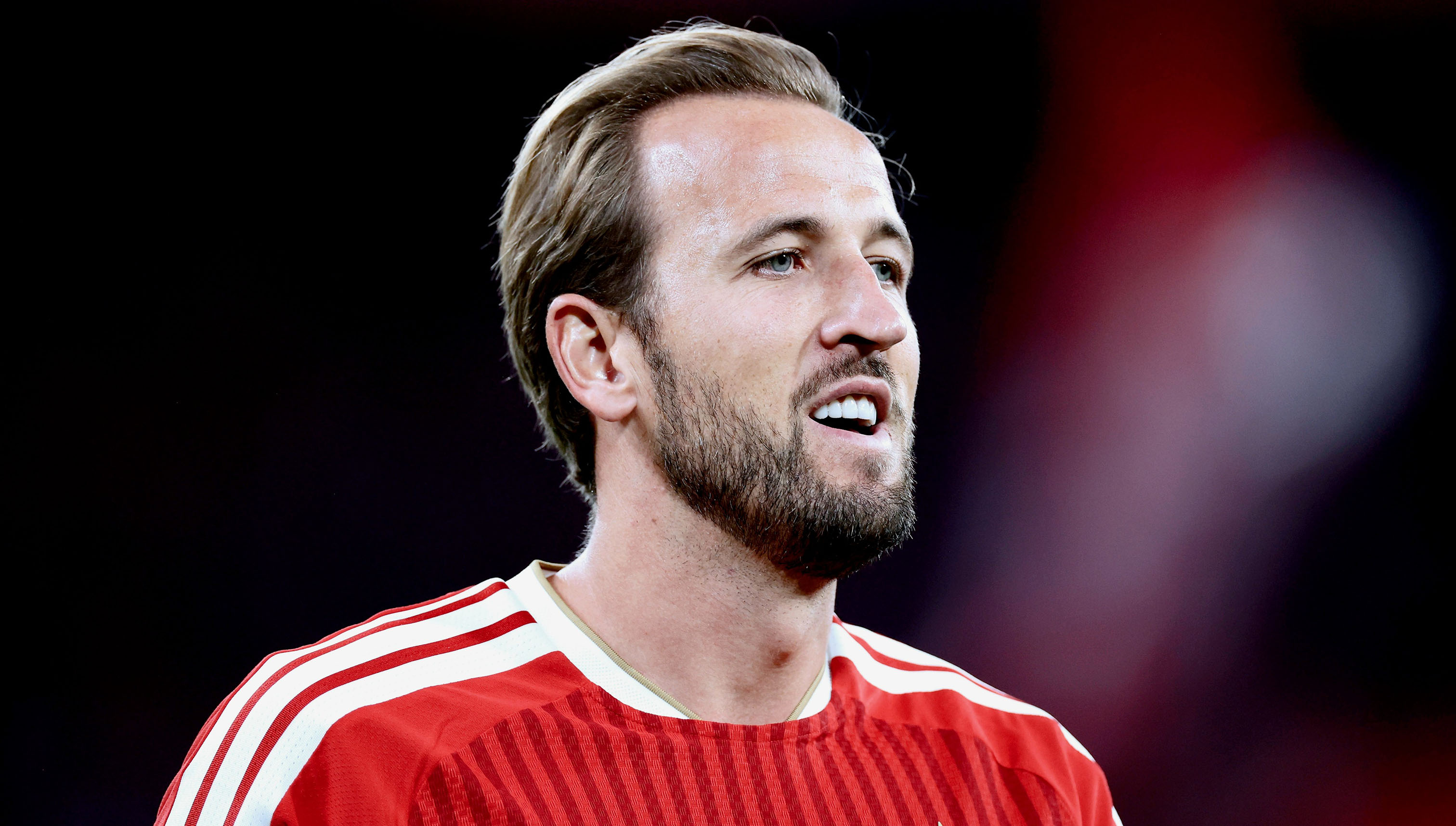
Keegan, who died in July 2026 aged 75, was among Europe’s footballing elite at the time. He had won the Ballon d’Or in 1978, and at the end of 1979 he would win it again – still the only Hamburg player ever to do so. Almost five decades on, Harry Kane could become the first Englishman since Keegan to win it while playing in the Bundesliga. The Bayern Munich striker is among the favourites for 2026. Between his two awards, though, Keegan made a name for himself not just on the pitch, but as a singer too.
Kevin Keegan at Hamburg: From a False Start to the Bundesliga Title
Keegan had arrived from Liverpool in the summer of 1977 for 2.3 million marks, shortly after winning the European Cup with them. No Bundesliga club had ever paid a higher fee. Hamburg, he told FourFourTwo in 2007, had offered him “four times the salary that I was on”.
In Hamburg, Keegan suddenly turned up with a perm. Before long, other footballers were copying it.
His first season was a disappointment. Günter Netzer, then Hamburg’s general manager, later said Keegan had told him early on that he wanted to leave. Netzer talked him into staying.

Eighteen months on, Keegan had found his feet. Under coach Branko Zebec he was given more freedom in the 1978/79 season, and the Hamburg fans named their striker, all of about 5ft 7in, “Mighty Mouse”, after the American cartoon character.
By the end of the season he was the club’s top scorer, with 17 goals.
How Kevin Keegan Recorded a Pop Song With Smokie’s Chris Norman
In 1978 Keegan was in the crowd when Smokie played Hamburg on tour. The British band were at the height of their success.
After the concert, the footballer and the musicians were introduced. “We had a beer together,” singer Chris Norman recalled in a 2012 interview with the German newspaper Die Welt. Then they moved on to the hotel bar, “or something like that”.
A few months later, Norman had all but forgotten the meeting when a call came from Cologne. Someone at the record company EMI told him Kevin Keegan was making a single and asked whether Smokie would write, produce and record the song. Norman and his bandmate Pete Spencer agreed: “Sounds like fun. Let’s do it.”
They already had a suitable song. It had been meant as the follow-up to “Stumblin’ In”, Norman’s duet with Suzi Quatro – another song for two people in love. But Quatro wasn’t interested.
The pair sent EMI a demo. Keegan got it on cassette and learned the tune and the lyrics at home.
In the spring of 1979 Norman came to Hamburg, to the Rüssl studio, then owned by the German comedian Otto Waalkes. He didn’t have much explaining to do.
Keegan wasn’t to lift the headphones off one ear while singing, or he wouldn’t hear himself properly, and he had to mind where the stresses fell. Of the footballer’s voice, Norman later said: “He can hold a note. Otherwise I wouldn’t have done it.”
It was never going to be a football song. For a single player that would have been “a bit strange”, said Norman, and EMI wanted a love song anyway. The B-side, “Move On Down”, was a rockier number.

In Germany, “Head Over Heels in Love” entered the singles chart on 18 June 1979 and stayed there for 15 weeks, one of them at No. 10. At home in Britain, it peaked at No. 31.
Kevin Keegan’s Second Single and His Farewell to Hamburg
By the time Keegan won his second Ballon d’Or in December 1979, the song had long since dropped out of the charts. In May 1980 he and Hamburg lost the European Cup final to Nottingham Forest.

For his second single, Keegan posed with a music stand in front of a football goal in 1980. Behind him, young fans waved Union Jacks.
It had been clear since February 1980 that he would leave Hamburg: Southampton had announced his signing. By the time the single entered the German chart in June, the England captain’s last season in Hamburg was over. It climbed to No. 61. In Britain, it never charted. Its title: “England”.
