



















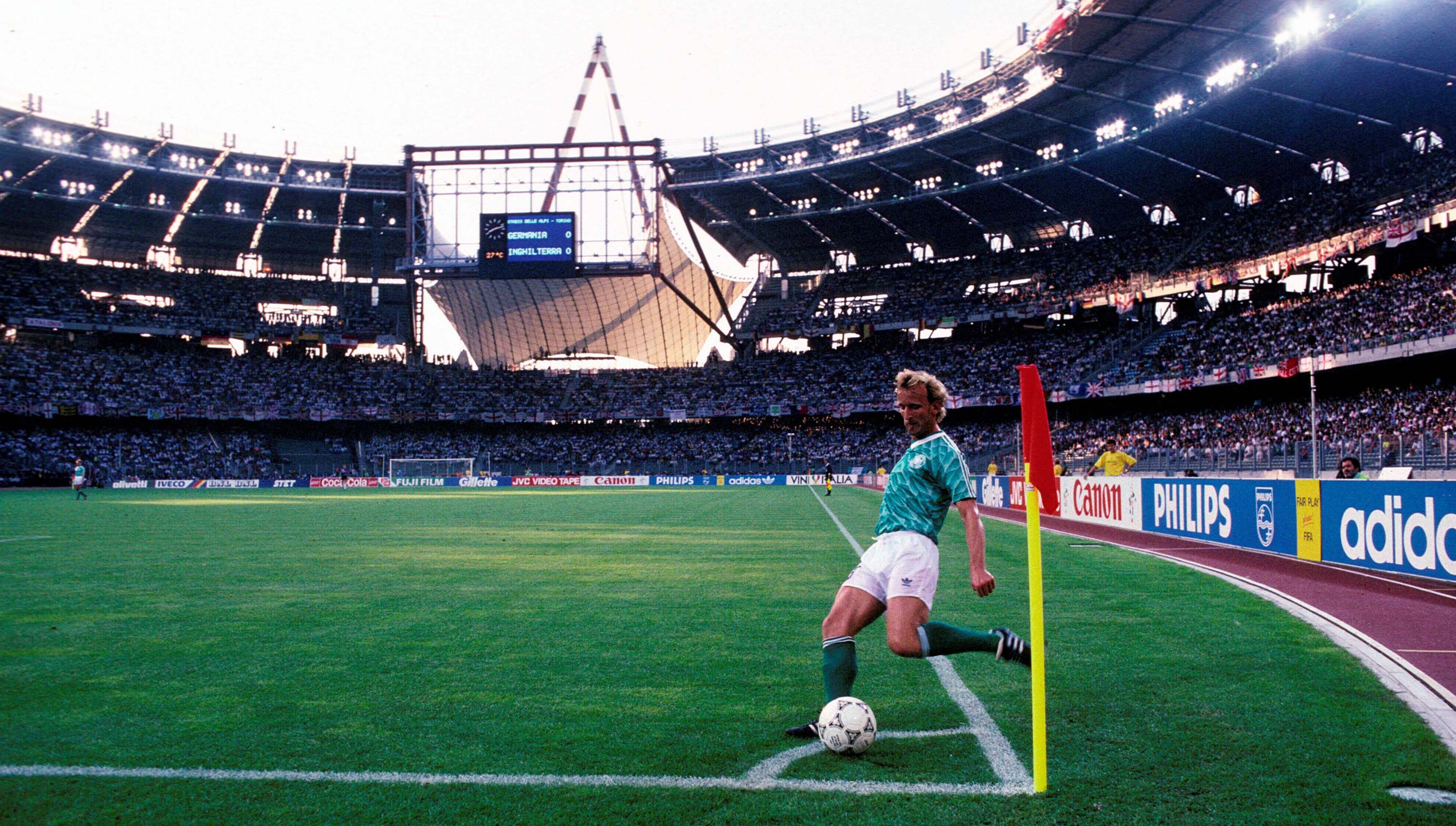
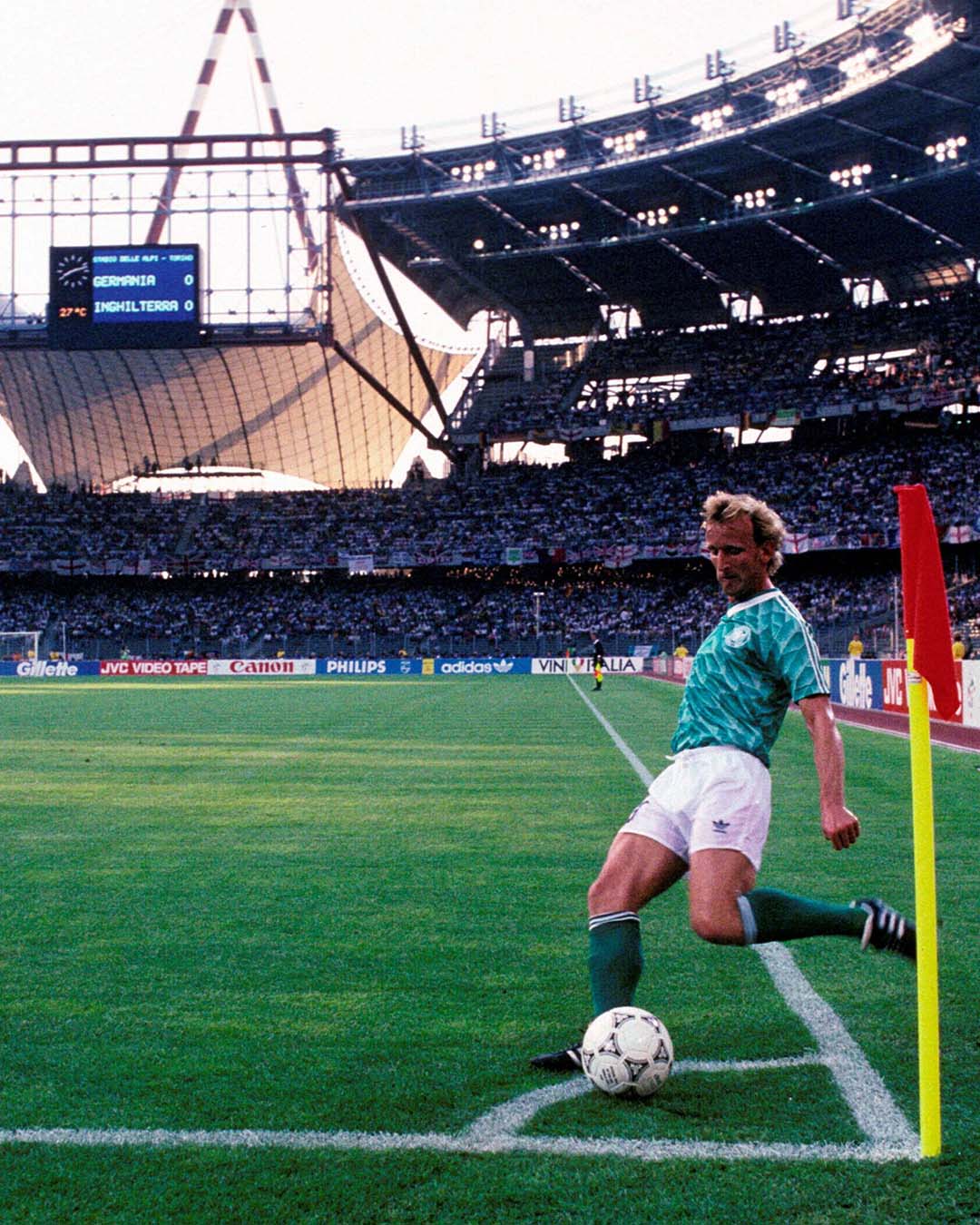
When FC Bayern Munich meet Borussia Dortmund, the Bundesliga calls it “Der Klassiker”. Yet for a long time, German football was defined by very different fixtures. The story of the name runs through Madrid and Barcelona all the way to Wembley.
In the 1970s, Borussia Dortmund were not Bayern Munich’s great rivals. BVB were relegated from the Bundesliga in 1972 and did not return until 1976. The title was shared between two other clubs in that period:

From 1969 to 1977, either Bayern or Borussia Mönchengladbach were champions nine years in a row. Looking back, the Bundesliga even speaks of the “original German Klassiker” between Bayern and Gladbach.
[story-end:#2F3B33]
The name “Der Klassiker” nevertheless belongs to a different fixture: Bayern against Dortmund. The label is relatively recent, and the rivalry behind it also took a long time to become what it is today.
How Bayern vs Dortmund Became a Top-of-the-Table Clash
Bayern against Gladbach was followed by another great rivalry. In the 1980s and 1990s, Werder Bremen became one of Munich’s most important challengers. In 1986, Werder could have clinched the title by winning the head-to-head meeting on the penultimate matchday. But Michael Kutzop hit the post with a penalty in the 88th minute, and on the final day Bayern edged past them.
Bremen won the title themselves in 1993.

Eleven years later, Werder sealed the championship with a 3-1 win in Munich.
[story-end:#2F3B33]
Relations were tense off the pitch too: Bayern general manager Uli Hoeneß and his Bremen counterpart Willi Lemke traded public blows for years.
For a long time, Borussia Dortmund played no comparable part in the title race. BVB had won the clubs’ first Bundesliga meeting 2-0 in Munich on 16 October 1965. Yet Dortmund did not become German champions again until 1995 – and they had Bayern to thank for it. On the final day, the Bavarians beat leaders Bremen 3-1, handing BVB their first title in 32 years.
With the defence of their title in 1996 and their Champions League triumph in 1997, the fixture developed into a meeting of two title contenders. Things got more heated on the pitch, too:

Oliver Kahn’s kung-fu leap at Stéphane Chapuisat in April 1999 remains one of the best-known moments of the rivalry.
[story-end:#2F3B33]
The two clubs did not stay on level terms, however. In spring 2005, BVB were on the brink of insolvency and lost touch with the top on the pitch as well. Only under Jürgen Klopp, who took over as coach in 2008, did the fixture once again become a regular meeting at the top.

Dortmund won the German title in 2011 and 2012 and beat Bayern 5-2 in the 2012 DFB-Pokal final, their fifth consecutive competitive win against them.
[story-end:#E3D37A]
A year later, on 25 May 2013, the two clubs met at Wembley in the first all-German Champions League final. Arjen Robben settled it in the 89th minute, making it 2-1 to Bayern.
When Did Bayern vs Dortmund Become “Der Klassiker”?
Who coined the name cannot be established. The comparison with Spain, however, predates Wembley. As early as April 2012, Bayern’s then sporting director Christian Nerlinger told Bild in an interview: “A duel could develop between Bayern and Dortmund like the one in Spain between Real and Barca.” A month later, Ottmar Hitzfeld, who had led both clubs to the league title and to Champions League glory, went a step further. In the official programme for the 2012 DFB-Pokal final, his guest column ran under the headline “This is the ‘Clásico’ of German football”.
On 27 February 2013, the day the two clubs met in the DFB-Pokal quarter-finals, UEFA headlined an article “Klassiker: Rivalität zwischen Bayern und Dortmund erreicht neue Stufe” (“Klassiker: rivalry between Bayern and Dortmund reaches new level”). The comparison drew wider international attention around Wembley: in the Champions League semi-finals, Bayern knocked out FC Barcelona and Dortmund eliminated Real Madrid, the very two clubs behind the Spanish original. After Bayern’s 3-0 win in Dortmund on 23 November 2013, UEFA’s English-language match report said the Bavarians had won “Der Klassiker”, in German and without further explanation.
What “Der Klassiker” Shares with El Clásico
For decades, Real Madrid against FC Barcelona has also been a contest between the capital and Catalonia, charged with political and social divisions. Bayern and BVB have no such backstory, and their meeting is not a derby either. The two coaches themselves described how young the rivalry was when it was increasingly being compared to the Spanish Clásico, as their sides met again in the 2014 DFB-Pokal final.

In the programme for that final, Pep Guardiola also drew the comparison with the meeting between Barcelona and Real Madrid, but said that fixture had “a much longer tradition and sometimes an even sharper edge”. Klopp added that Bayern against Dortmund had only “developed into a really big fixture in the last four or five years”.
[story-end:#E3D37A]
The name placed Bayern against Dortmund alongside a rivalry whose history reaches far beyond football. Yet it is instantly understood: anyone who knows “El Clásico” knows without further explanation that it refers to a league’s most important game.
How the Bundesliga Markets “Der Klassiker” Internationally
The Clásico analogy has since become a fixed name. The Bundesliga uses “Der Klassiker” in German in its English-language previews and reports, just as UEFA did in 2013. On its website, the league itself draws a line between the two rivalries: Bayern against Dortmund, it says, is shaped above all by sporting competition. It openly admits there that the label can come across as artificial.
The Bundesliga’s great rivalries have shifted time and again. In the 1970s, Bayern against Gladbach needed no name of its own to be the league’s defining fixture. Later, the same was true of Bayern against Bremen. Today “Der Klassiker” stands for a match whose name has long worked regardless of how much is at stake on the pitch.
