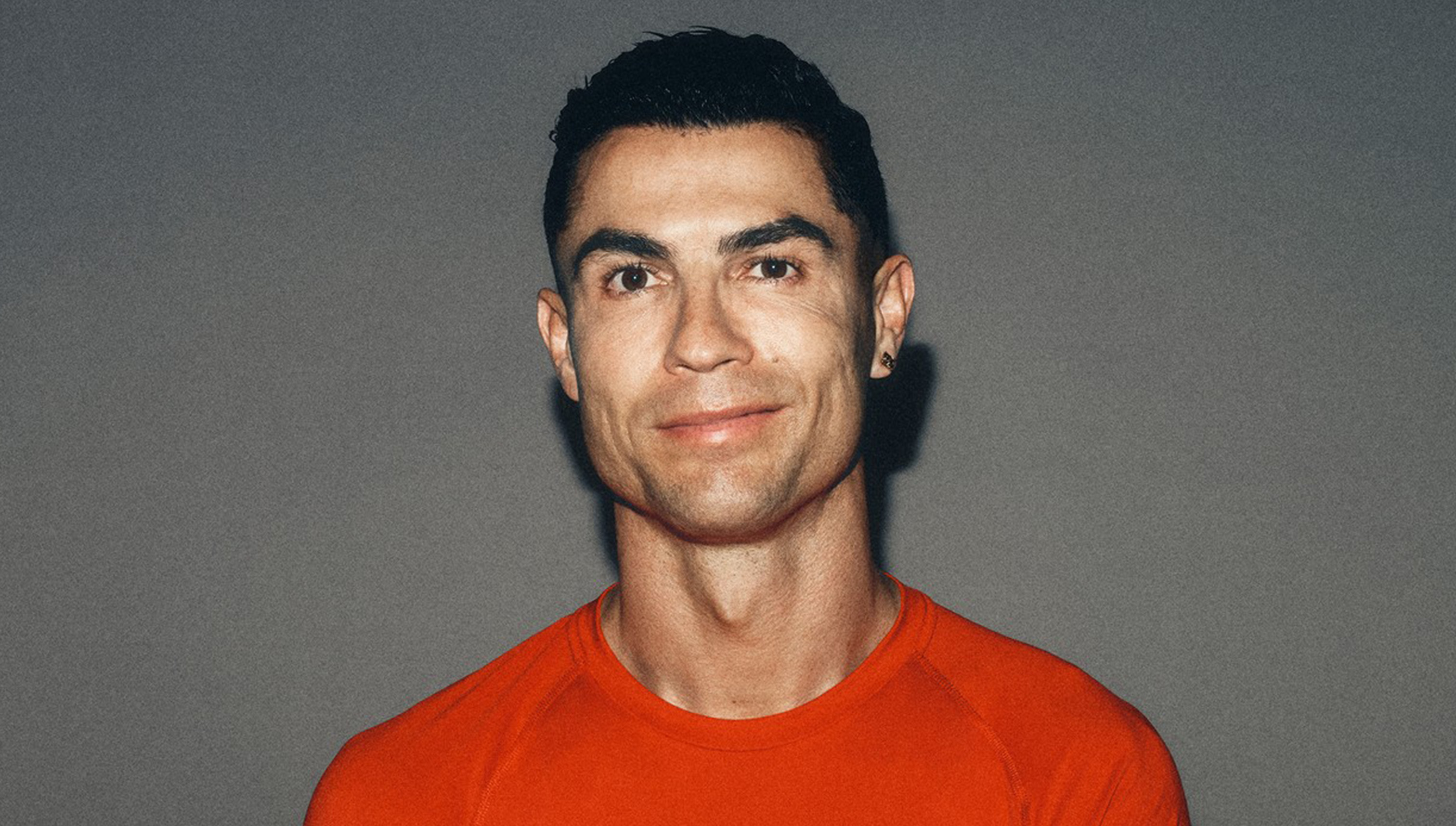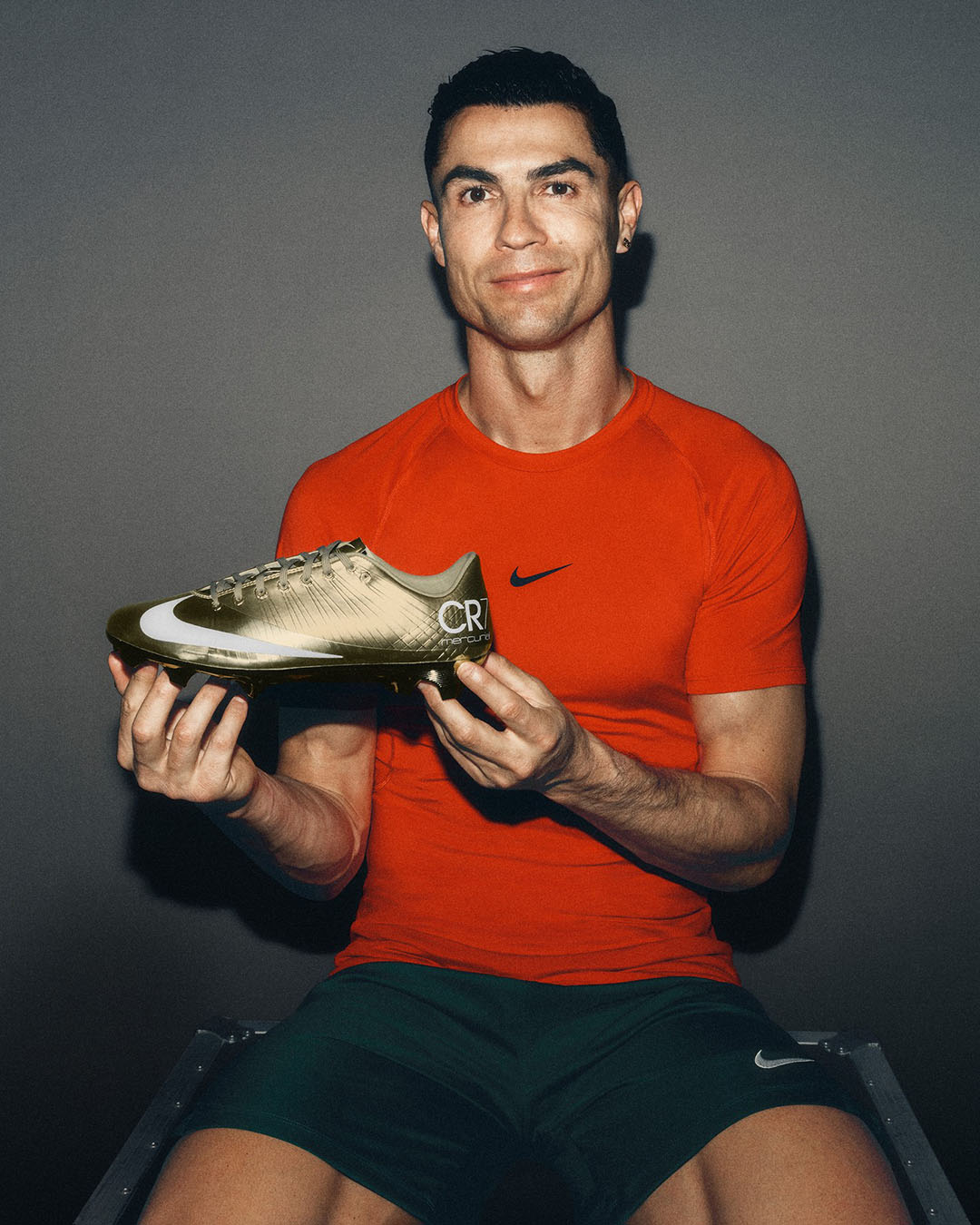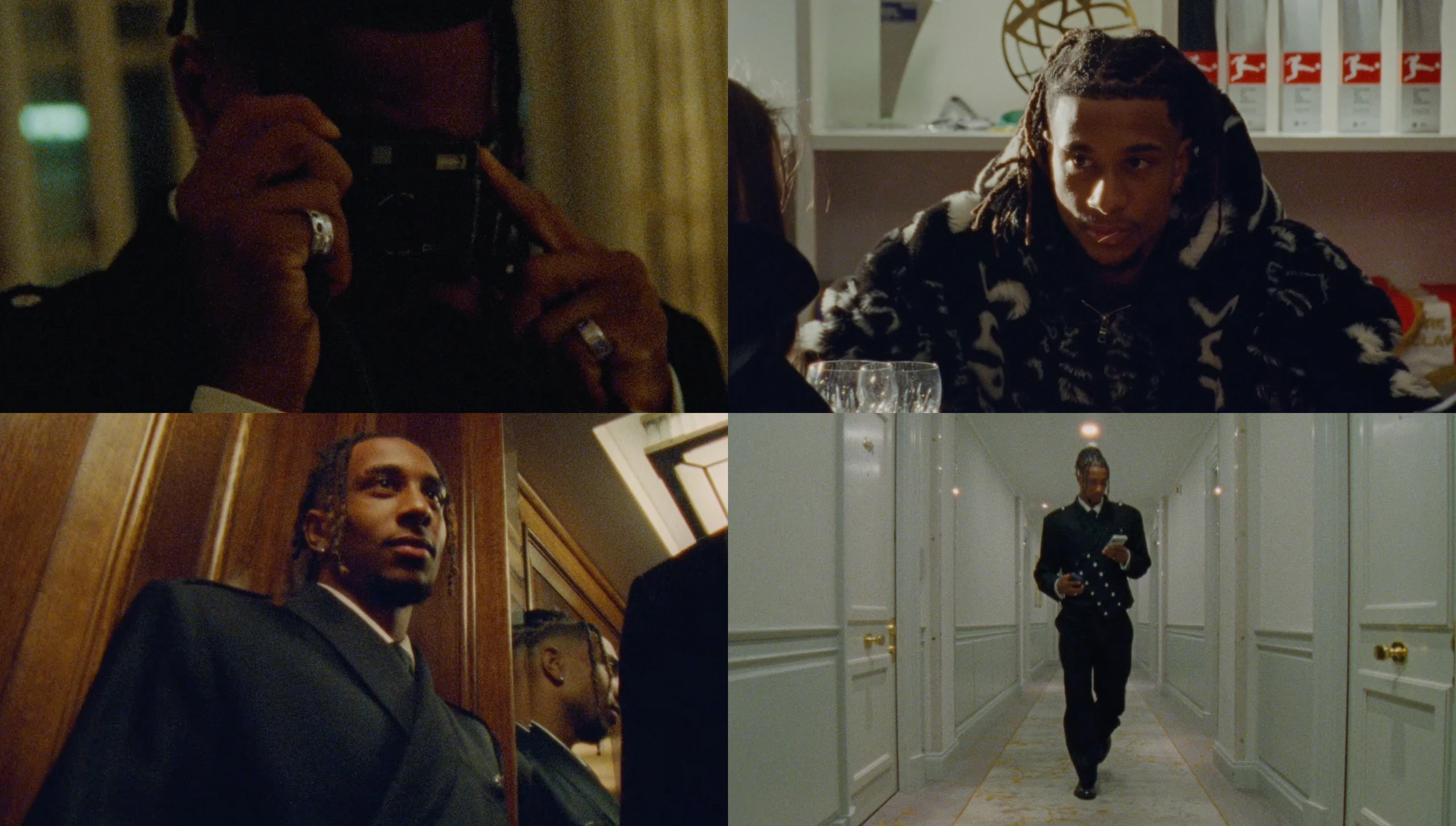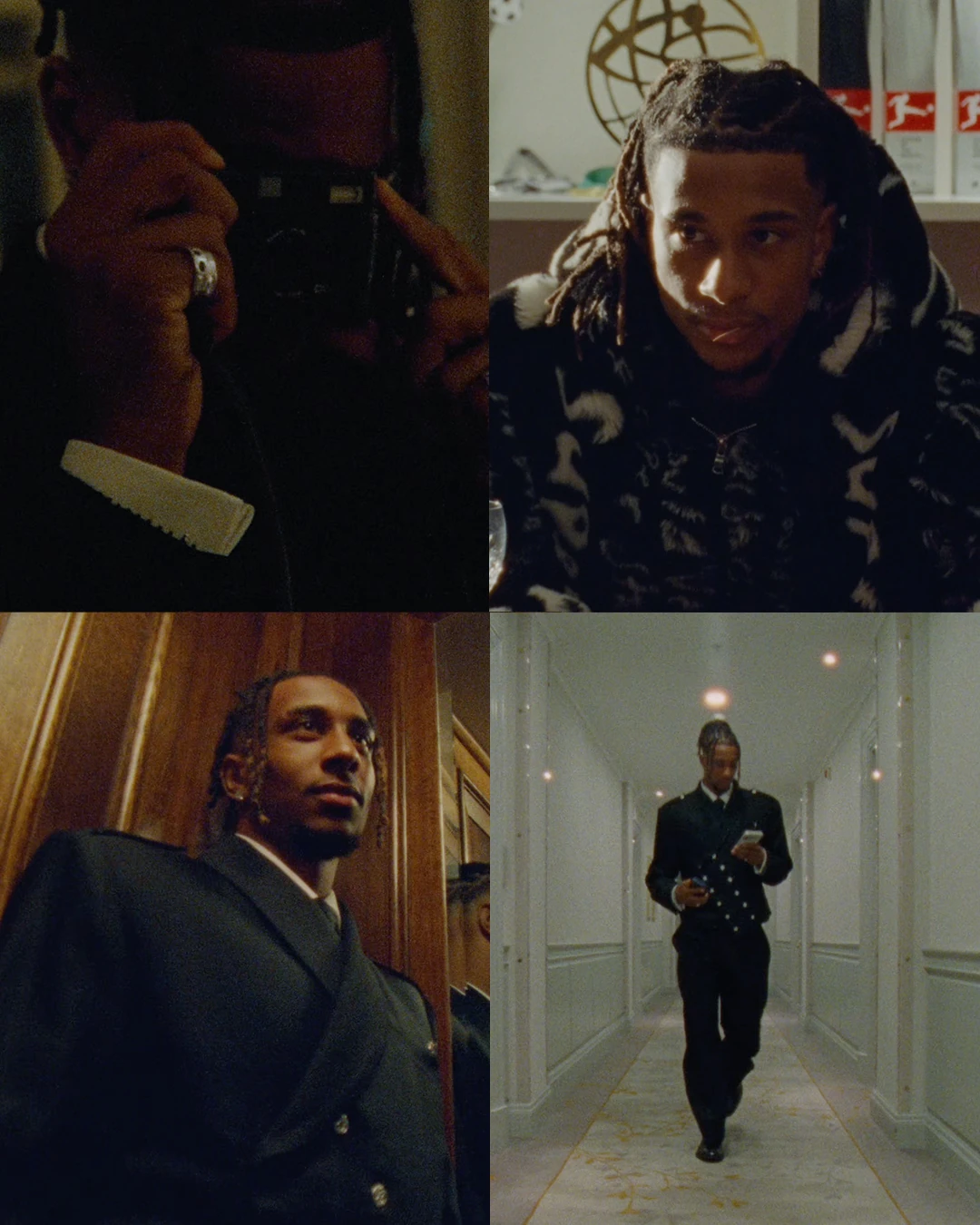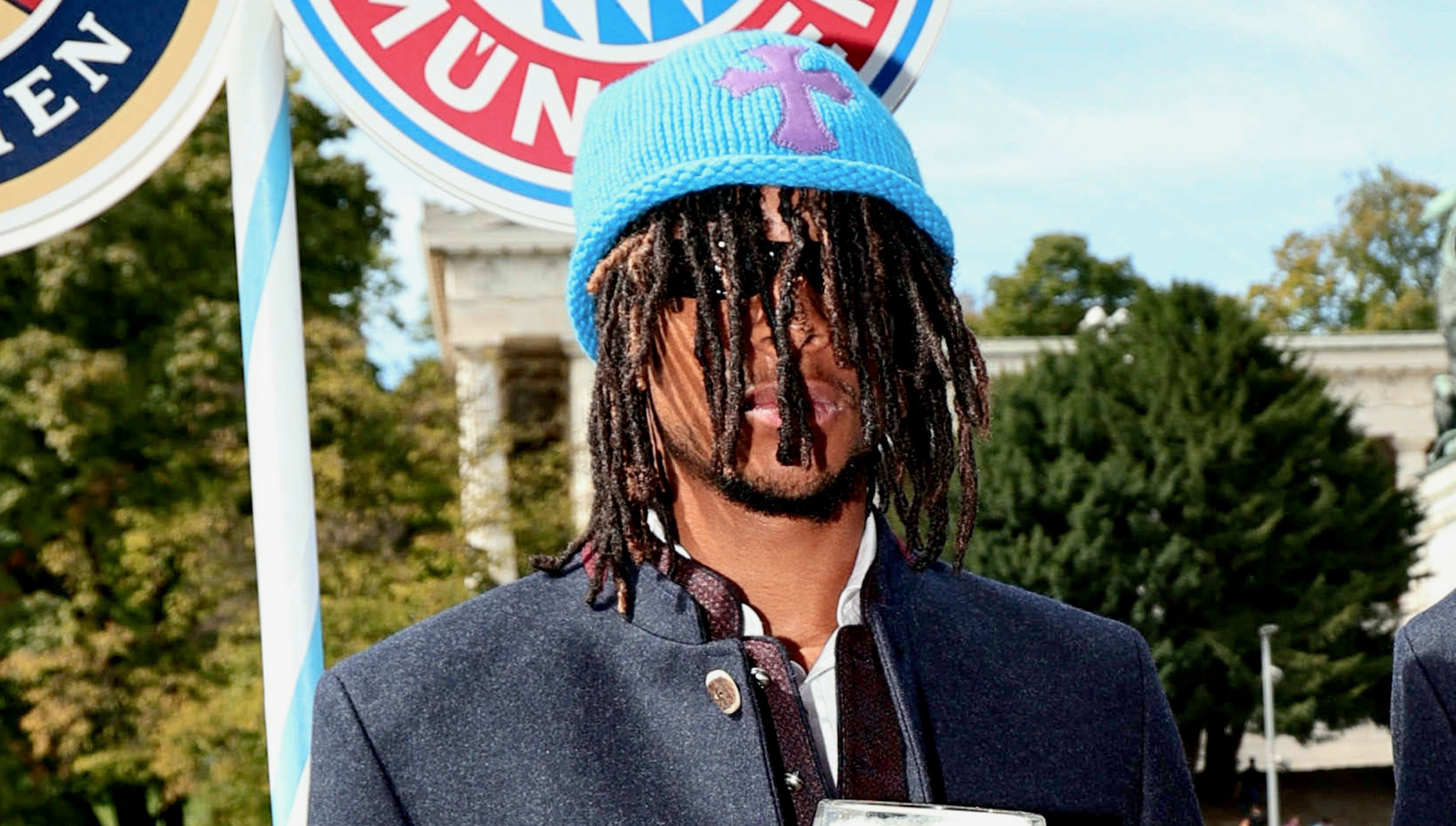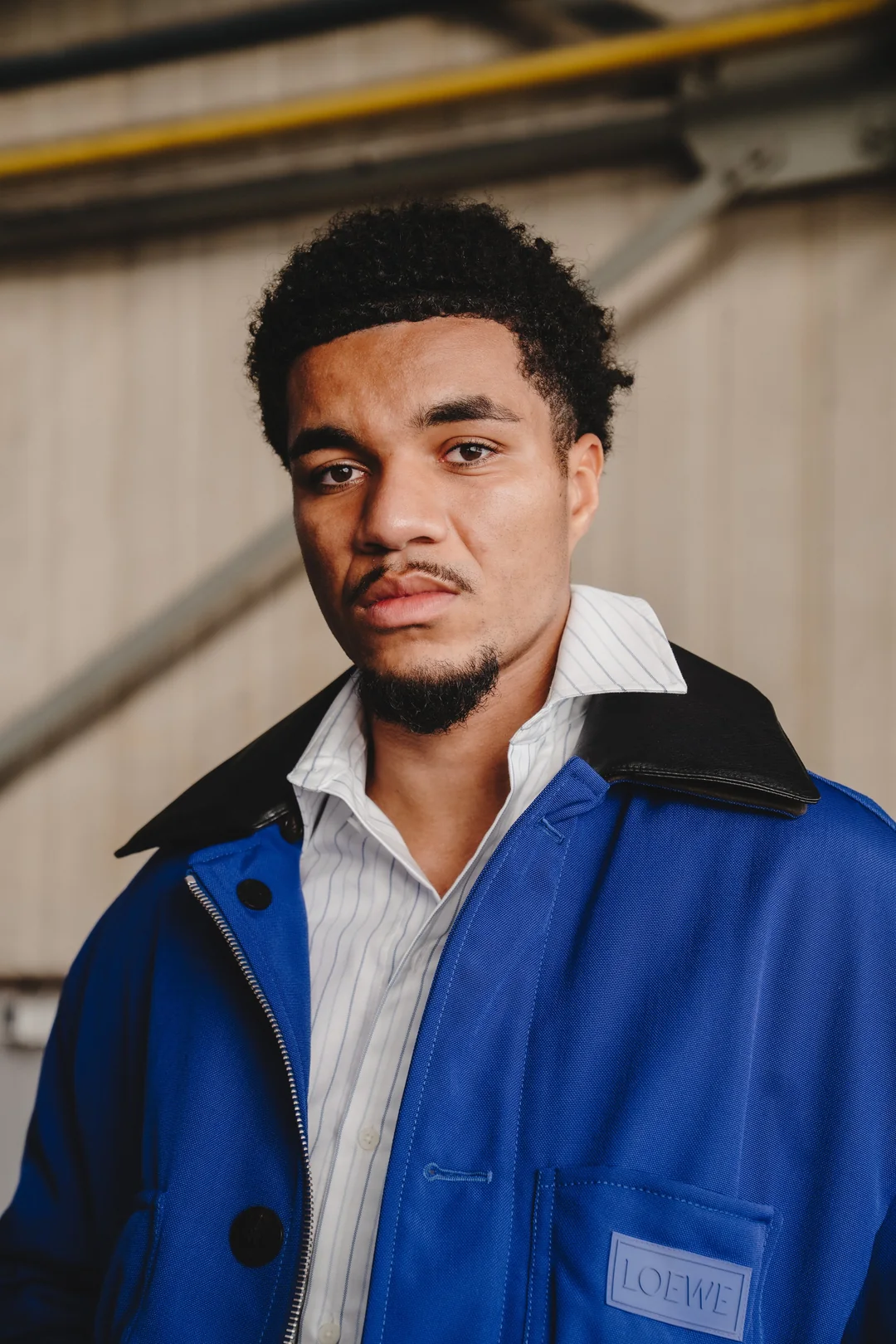


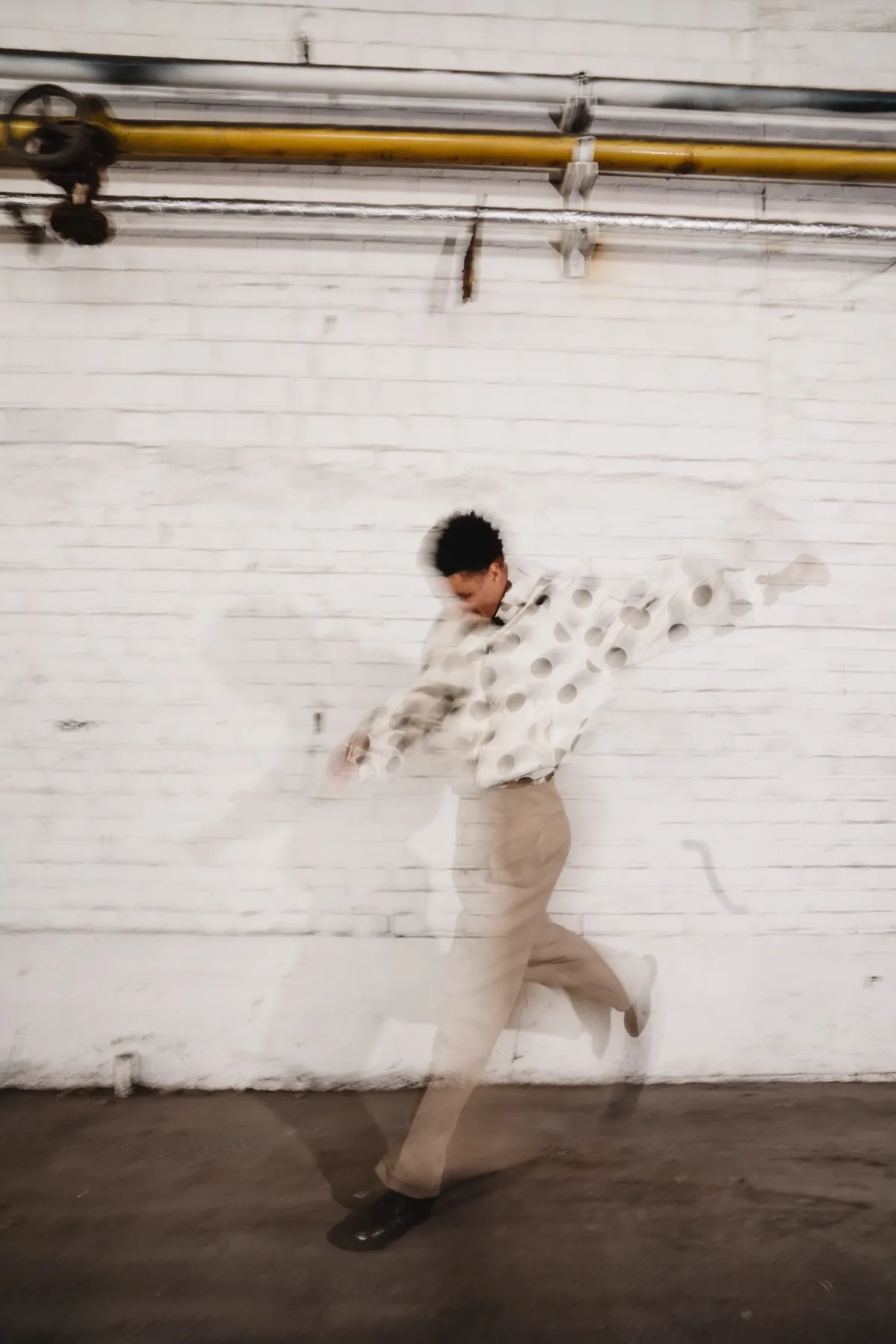
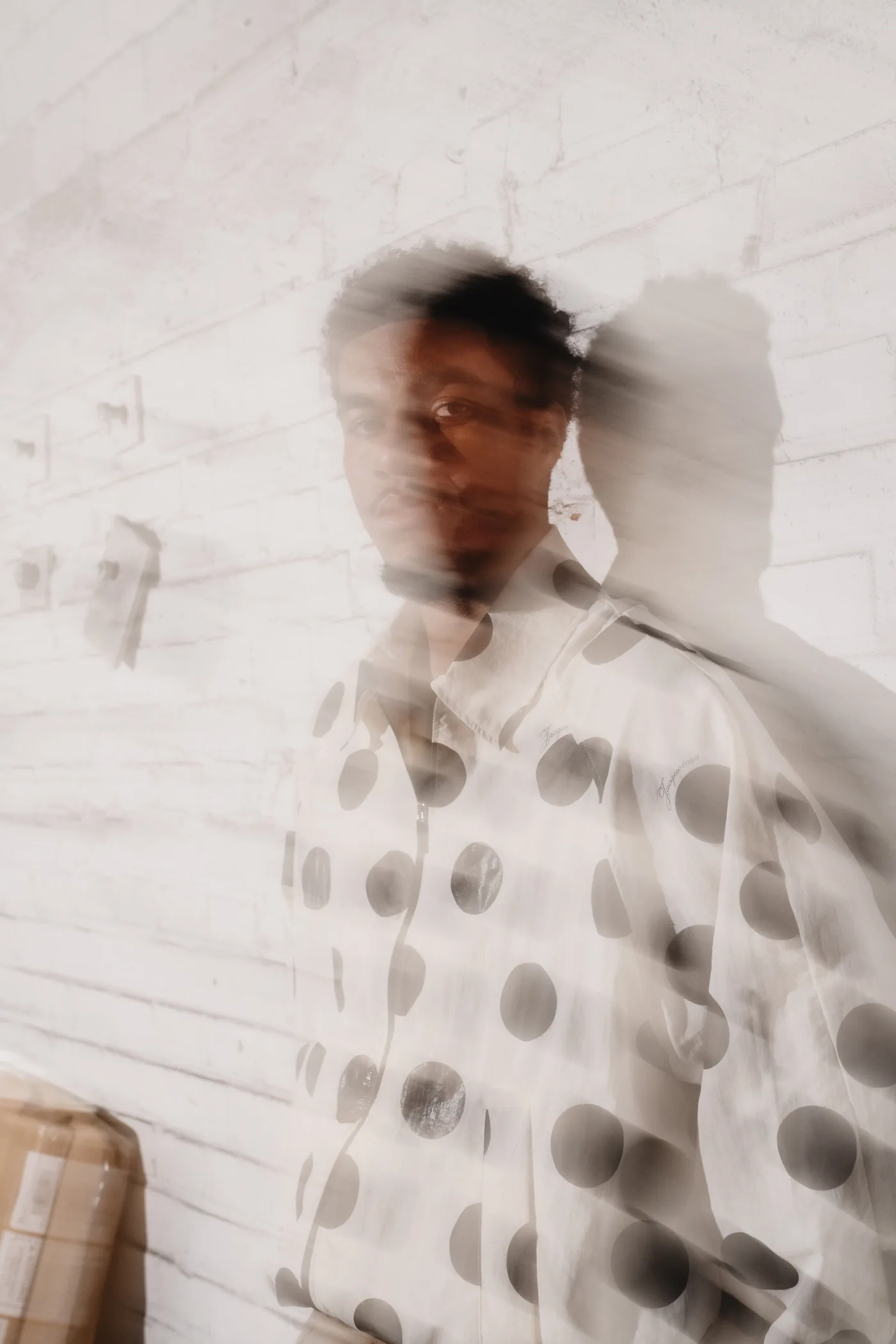
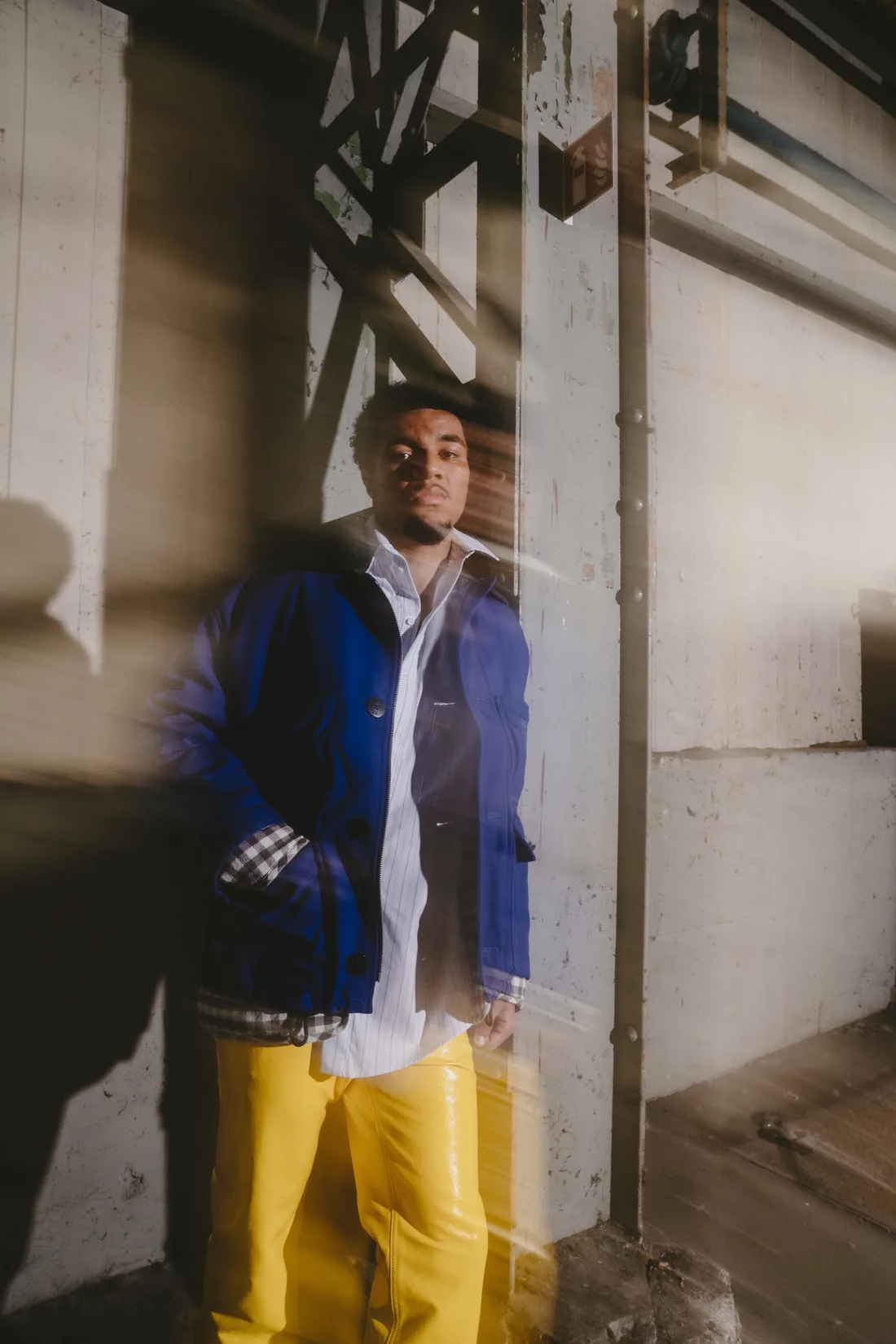
Malik Tillman is standing in the middle of an empty industrial hall. In front of the roller doors, daylight falls in stripes across the concrete floor. The hall belongs to Areal Böhler in Düsseldorf, a former steelworks that now hosts trade fairs and events. One moment he is leaning against a concrete pillar, the next he is sitting on a rug in front of the windows or standing before a tower of speakers.


He is game for every idea, and when he gets a first look at the pictures between set-ups, he is surprised – in the best possible way. Away from the pitch, he shows a side of himself that is rarely seen.
The word on Tillman, after all, is sometimes that he is so quiet it is impossible to have any fun with him. Those close to him, he says, see him differently. None more so than his brother, Timothy Tillman: three years older, also a professional footballer, now at Los Angeles FC, and by Malik’s side from the very start. How would Timothy describe him? “As a quiet guy. I think he’d also say I’m very laid-back, that you can have fun with me and that I’m good company.”
That strangers see it differently hardly bothers him: everyone is entitled to their opinion, and those who know him know what he is like. “I can be different too.” Whoever passes such judgements, he adds, is usually not someone he wants anything to do with anyway.
One reading does annoy him, though: when people take his body language as a lack of commitment. “Yes, that does get on my nerves,” he says. “The people at the club know what I’m like.” From the outside, he adds, that is naturally harder to see. A look at the statistics, he says, tells a different story: he runs and sprints a lot. “Because of my body language, some people might think I can’t be bothered or that I’m not interested. But that’s not the case.”
The expectation that he should carry himself differently has followed Tillman since his youth. He joined Bayern Munich at 13, and even there he was told he needed to be louder on the pitch and use his elbows. “I’m aware that it’s also part of football,” he says. “But I think every player is different. I think that’s a bit of an issue in Germany: they want to mould everyone in the same direction.” Everyone is expected to bring the so-called German virtues. He has never been like that, he says.
“I’ve actually always been different – always quiet and very relaxed. I think that’s just me. It’s how I play, too. And I don’t think that will ever change.”
He is aware, though, that in certain situations you sometimes have to be louder.
From Munich, his path led abroad. At 20 he moved to Glasgow to join Rangers, where he was named PFA Scotland Young Player of the Year. He went on to win two Eredivisie titles with PSV Eindhoven before Bayer Leverkusen brought him back to the Bundesliga in the summer of 2025 for around €35 million – a club-record fee.
His first season at Leverkusen, however, did not go to plan. Before the winter break he started 14 of 17 competitive matches; afterwards, just 10 of 25. The limited playing time in particular weighed on him. Giving up was never an option, “but sometimes it’s still hard”. You can’t change the past, he says, so you have to look ahead. “And God willing, the hard work will pay off again one day.”
What he learned in that period was, above all, something about himself. “When I’m in a good mood, I actually play my best too. That’s why I try to approach everything in a good mood.”
And if something is on his mind, he usually tries to sort it out on his own first – and not just when it comes to football. “But sometimes it also helps to talk to others about it: my brother, my closest friends and now and then my agent too.”
His brother comes first on that list – and is also the one furthest away. Because of the distance and the time difference, Tillman says, they are in touch less often than before. “We still have a really close relationship. Whenever we’re together, we pretty much always have a great time.” When they do see each other, they try to spend as much time together as they can.
Malik Tillman has strong ties to the United States himself. Raised in Franconia, he plays for the US national team; his mother is German, his father was an American serviceman. When he is in the States, he says, everything feels different. “The people, the buildings, the streets. Just everything.” Anyone who has been there can vouch for that, he adds. The 2026 World Cup, he says, has brought him even closer to the country.
Asked where home is, Tillman answers in two sentences. “For me, Germany is home. The US I see as my roots, in a way.”
The brothers shared a childhood in Franconia in which football was not everything. “I was a passionate BMX and mountain-bike rider,” Tillman says. There was no proper park, just a patch of ground with dirt lying around. “That’s where we built our own ramps.” Once he came off and needed stitches. “But that was my thing back then.”
Alongside football and cycling, Tillman had another dream as a boy: he wanted to be a chef. “Still do, actually,” he says, laughing softly. “If I weren’t where I am today, I could still picture it.” He really enjoys the cooking itself, less so everything around it: the shopping, the cleaning, the washing-up. “Chopping is fine.” Football was always number one, he says, “but chef came next”. These days football dictates his calendar, and with all the travelling there is often little time left for family and friends.
When he does get home, music plays almost non-stop. His taste is very much his own, he says, and he couldn’t name any one influence. “It goes from Afrobeats to Michael Jackson and can change pretty much every minute.” For our playlist, he has narrowed it down to five songs:

SUPERSUB SOUNDS · Malik Tillman · 5 Selected Tracks
And then there is fashion. “I’m someone who likes buying complete outfits. I browse a bit and see what I like. Of course I don’t buy something every day, but I just like looking at things.”
Tillman occasionally shares his outfits on social media. Those posts, however, only offer a glimpse of how interested he is in fashion. “That’s why people might not necessarily expect it of me.” He puts it like this: “Because I’m a quiet guy, fashion lets me show yet another side of myself.”
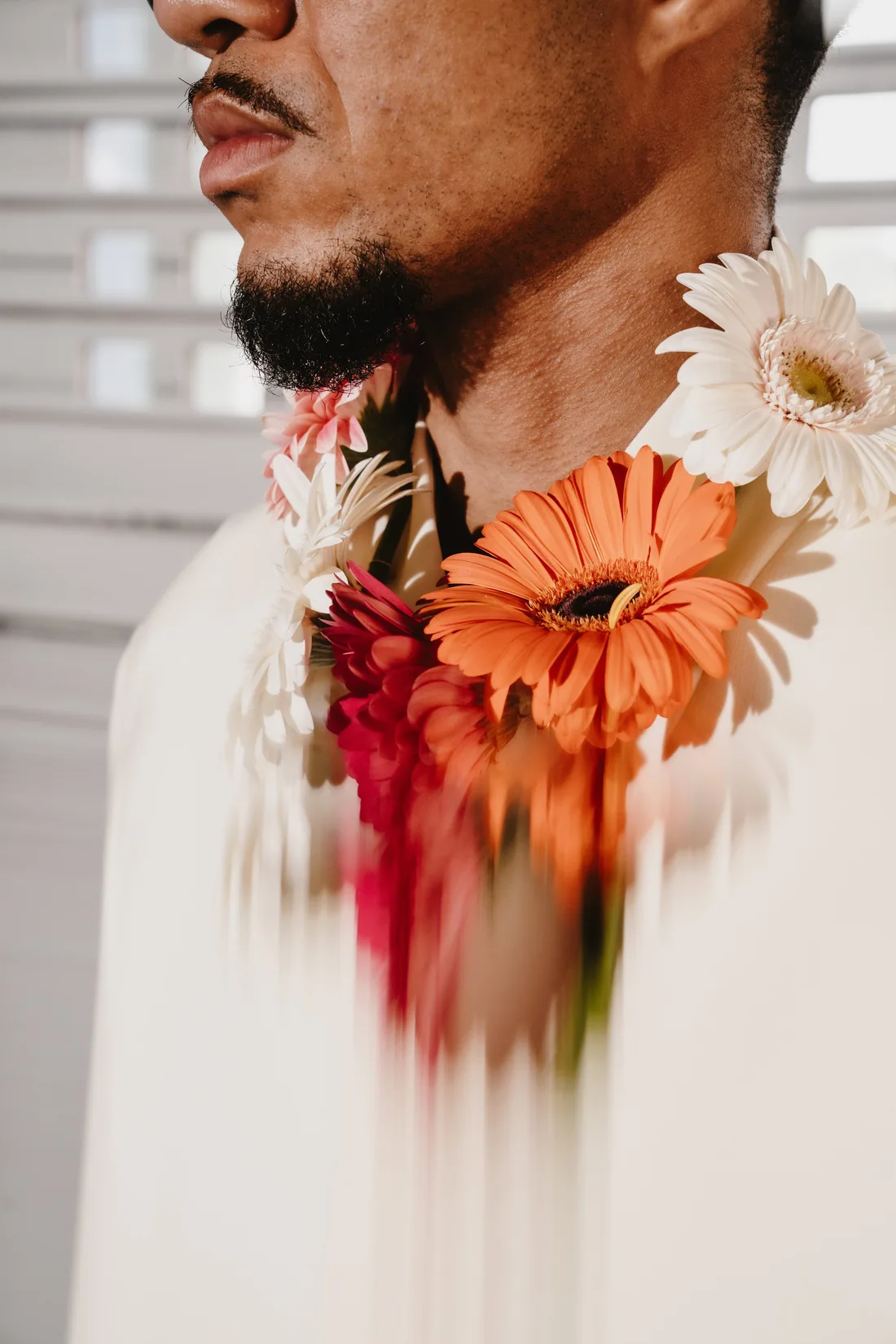
He can pull off a lot and likes to mix it up, “whether it’s streetwear, casual or sometimes smart and elegant”. In the Düsseldorf hall he switches between four different looks. “Through fashion I can show even more of who I really am.”
He doesn’t need to be any louder to do it.