






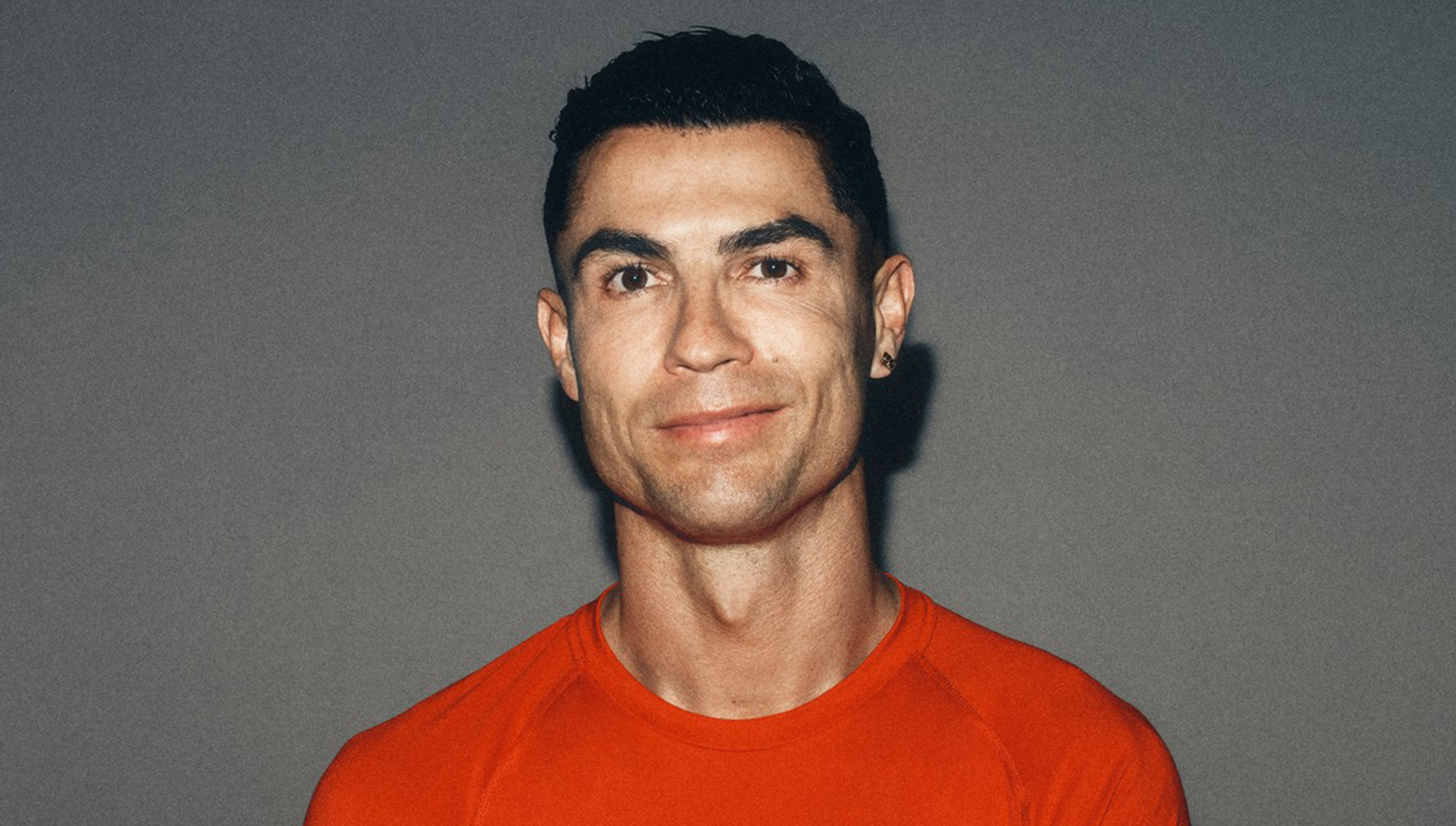
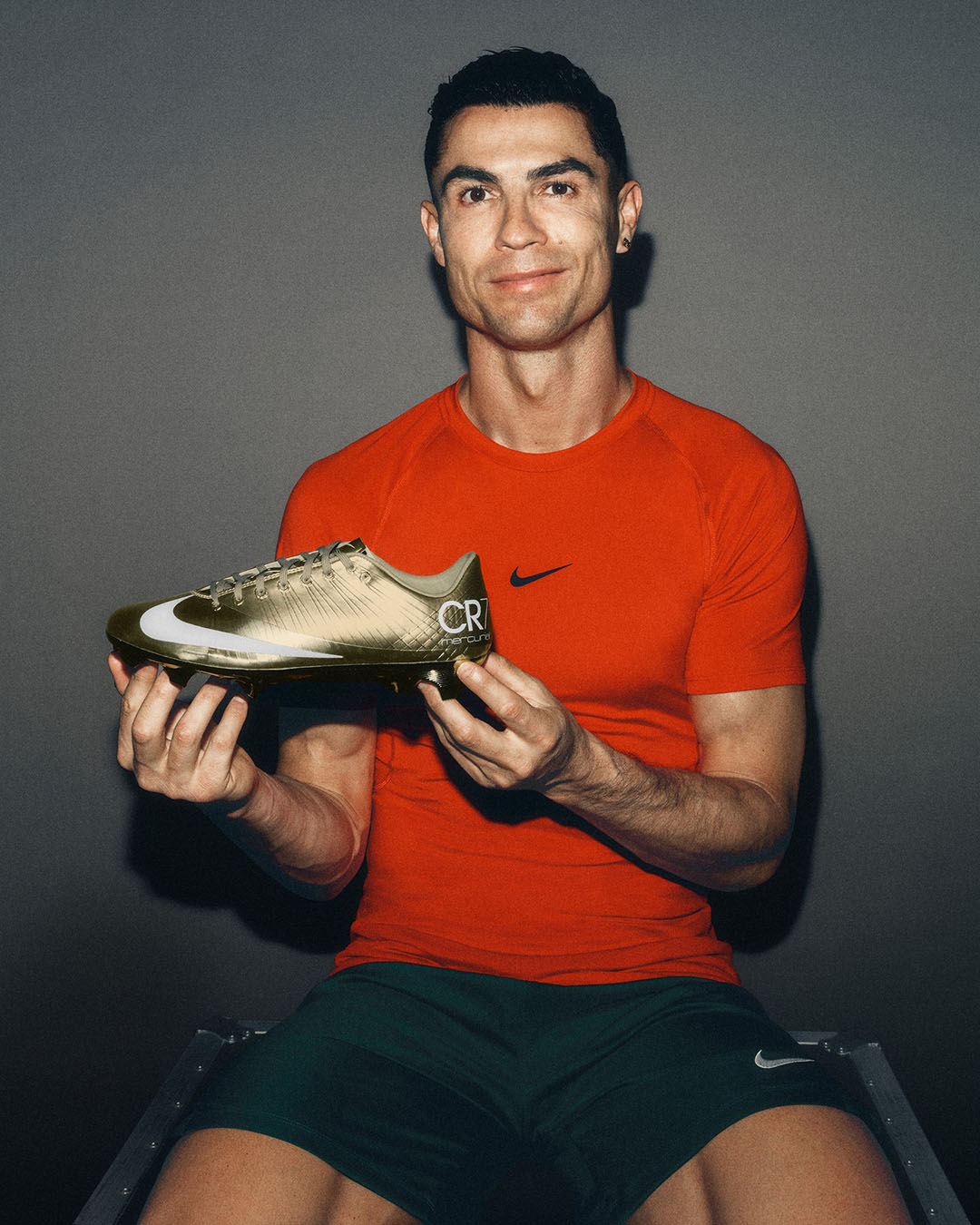


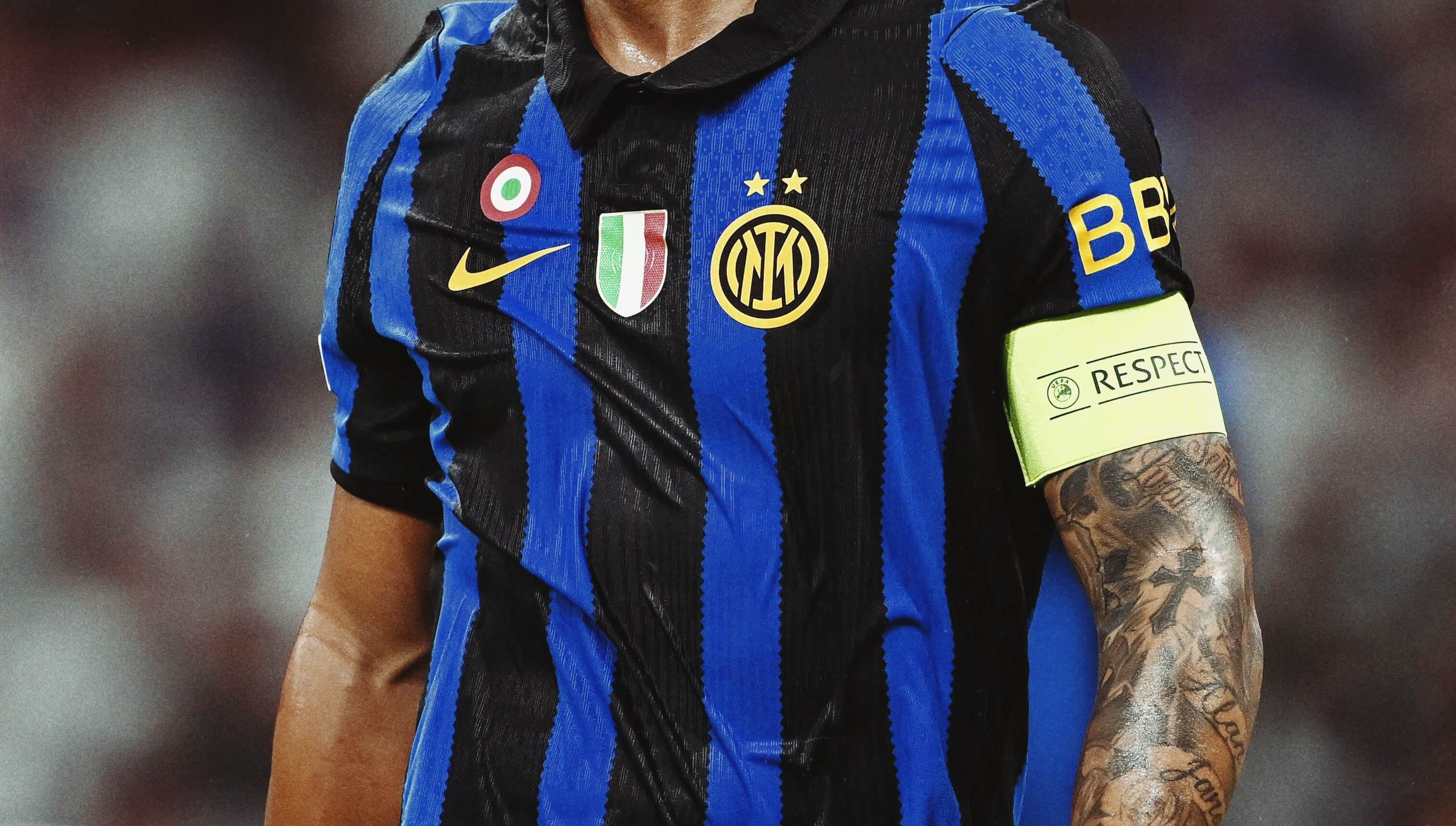






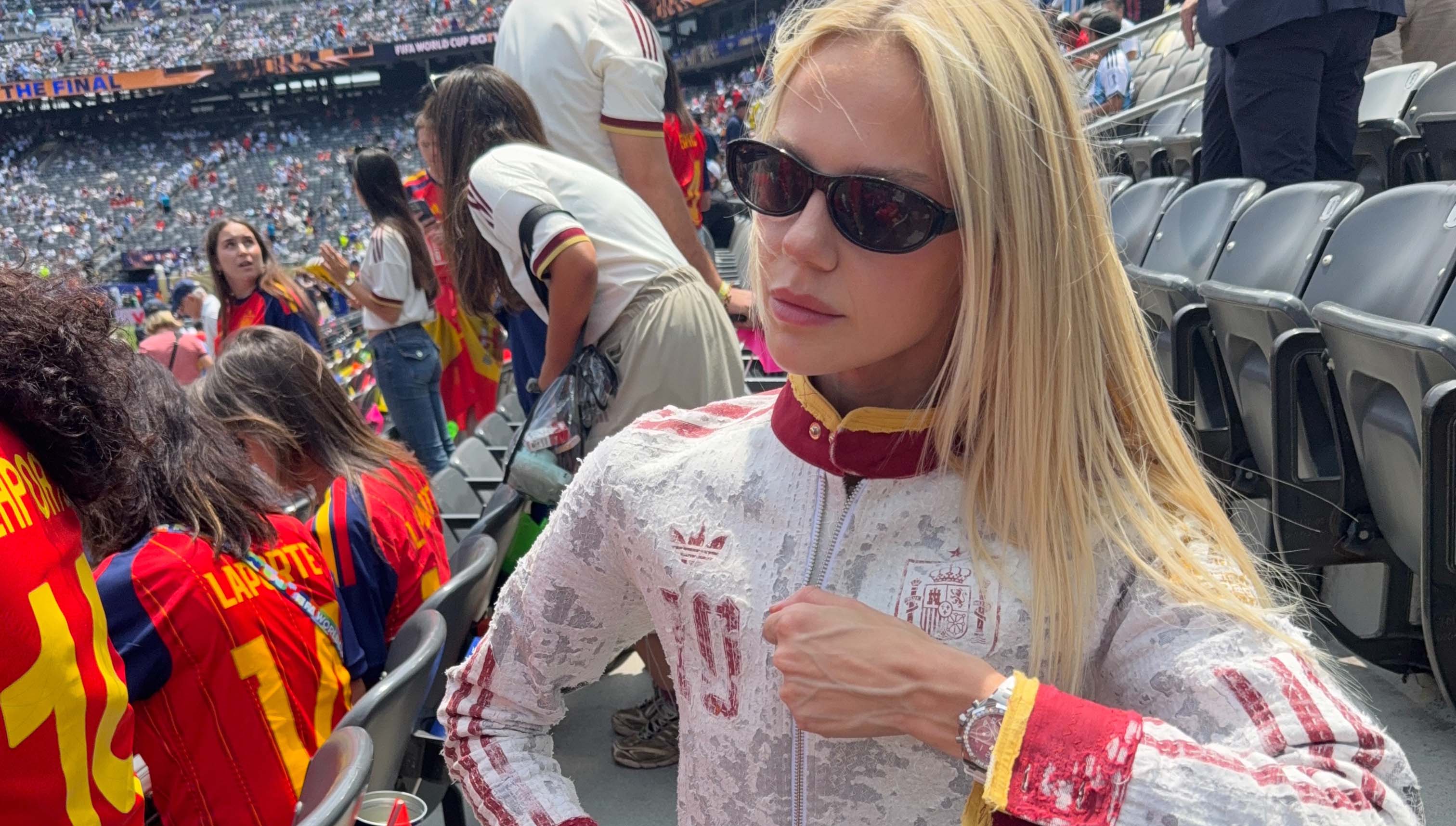
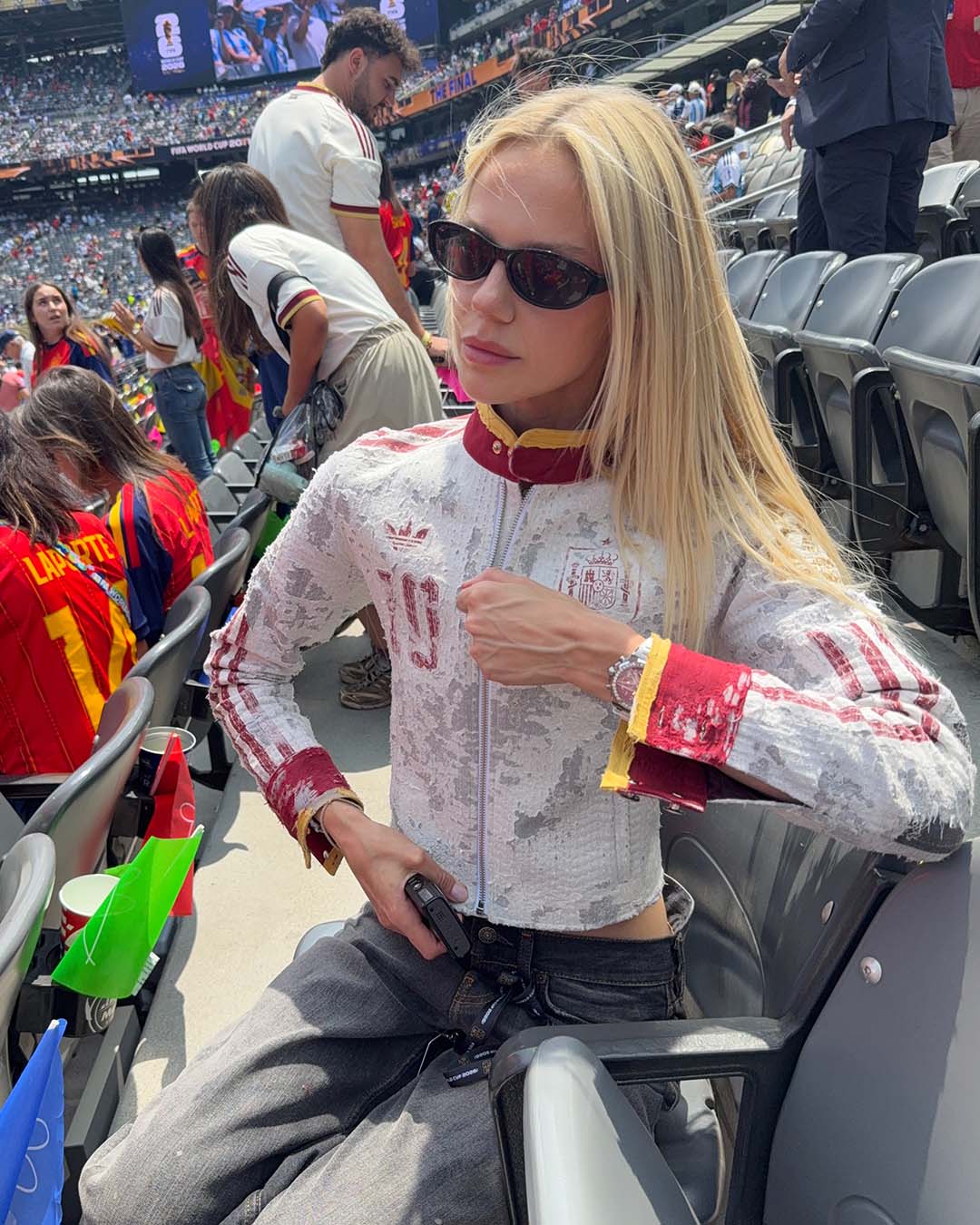


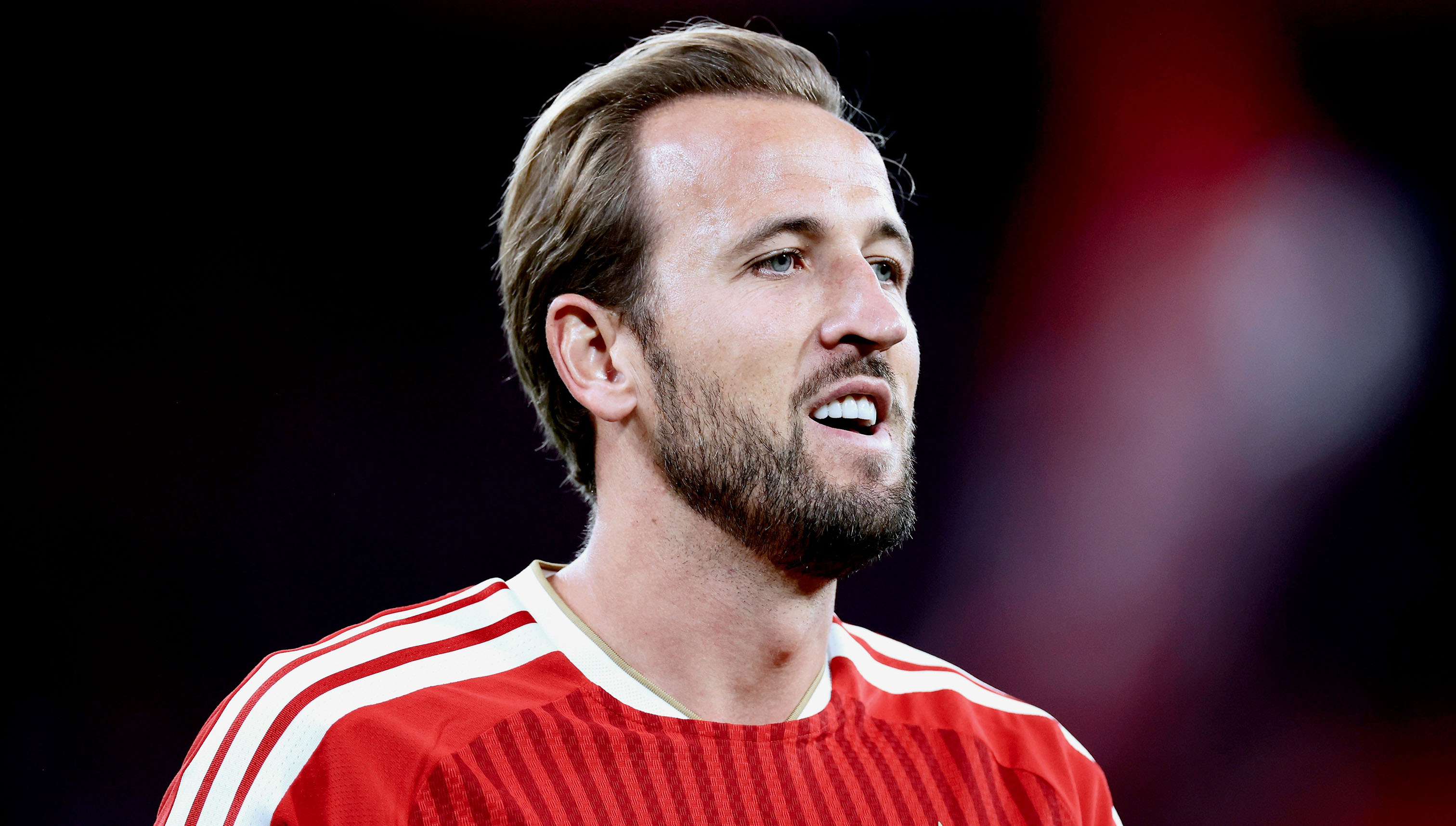

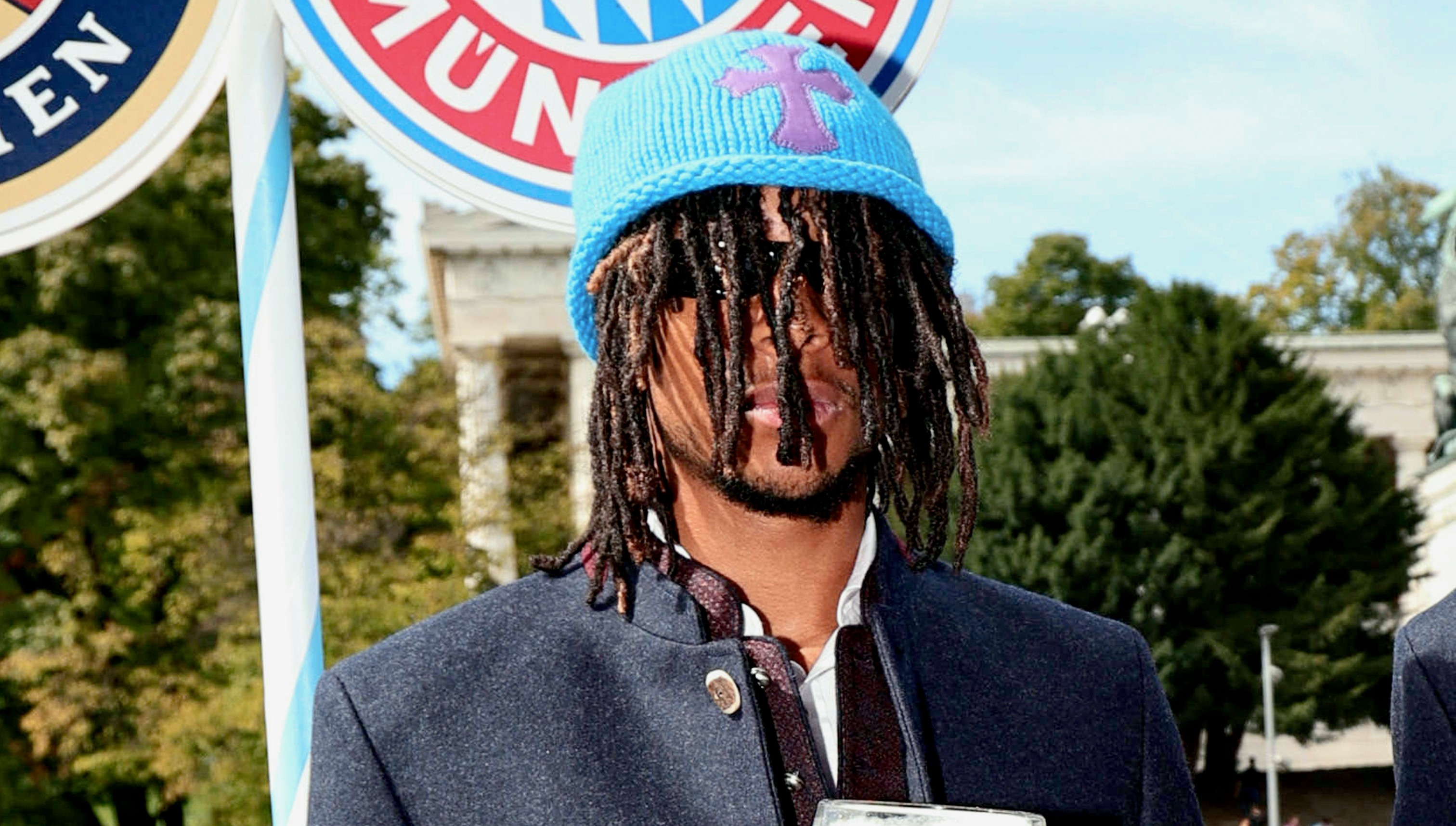


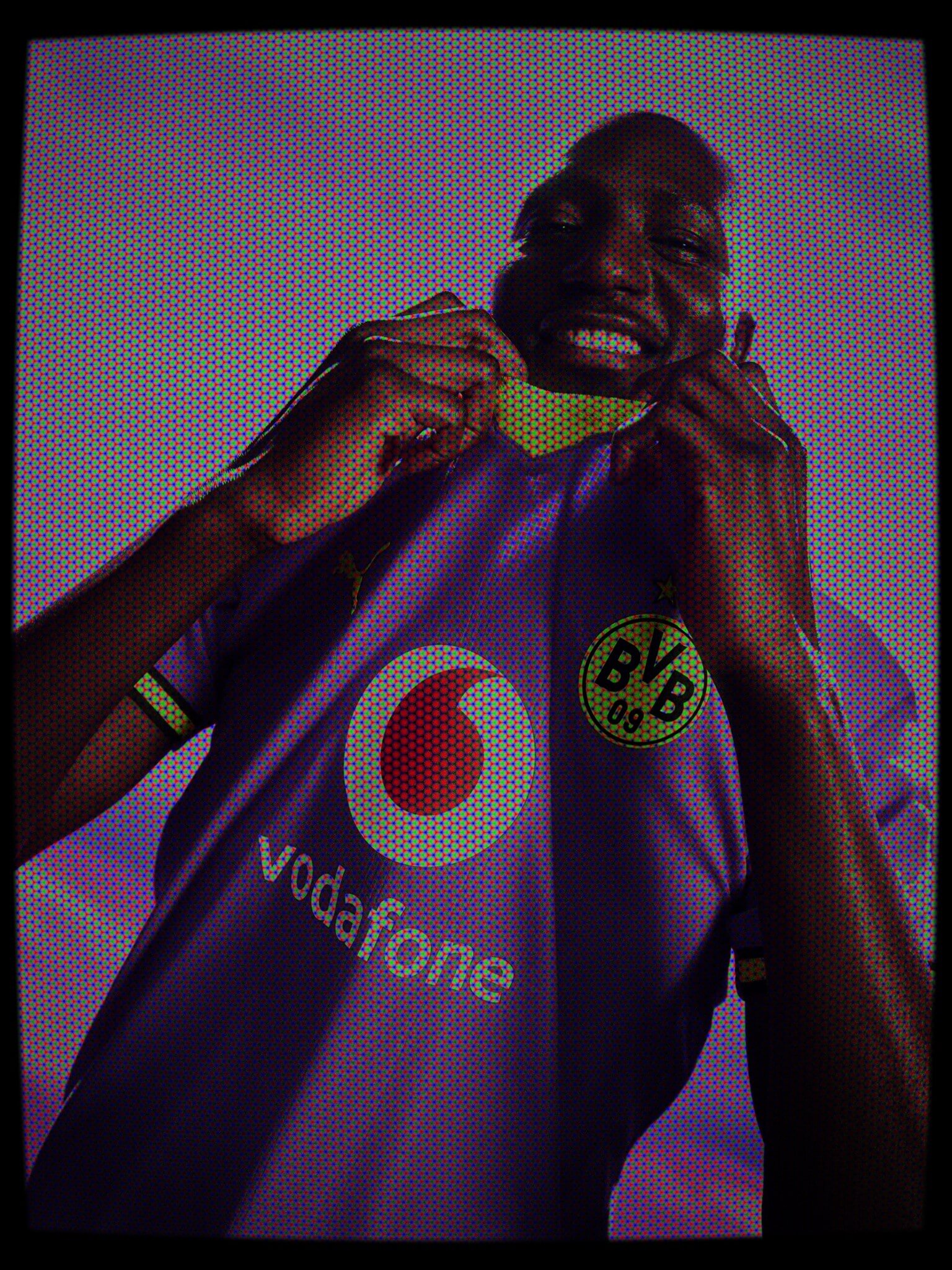





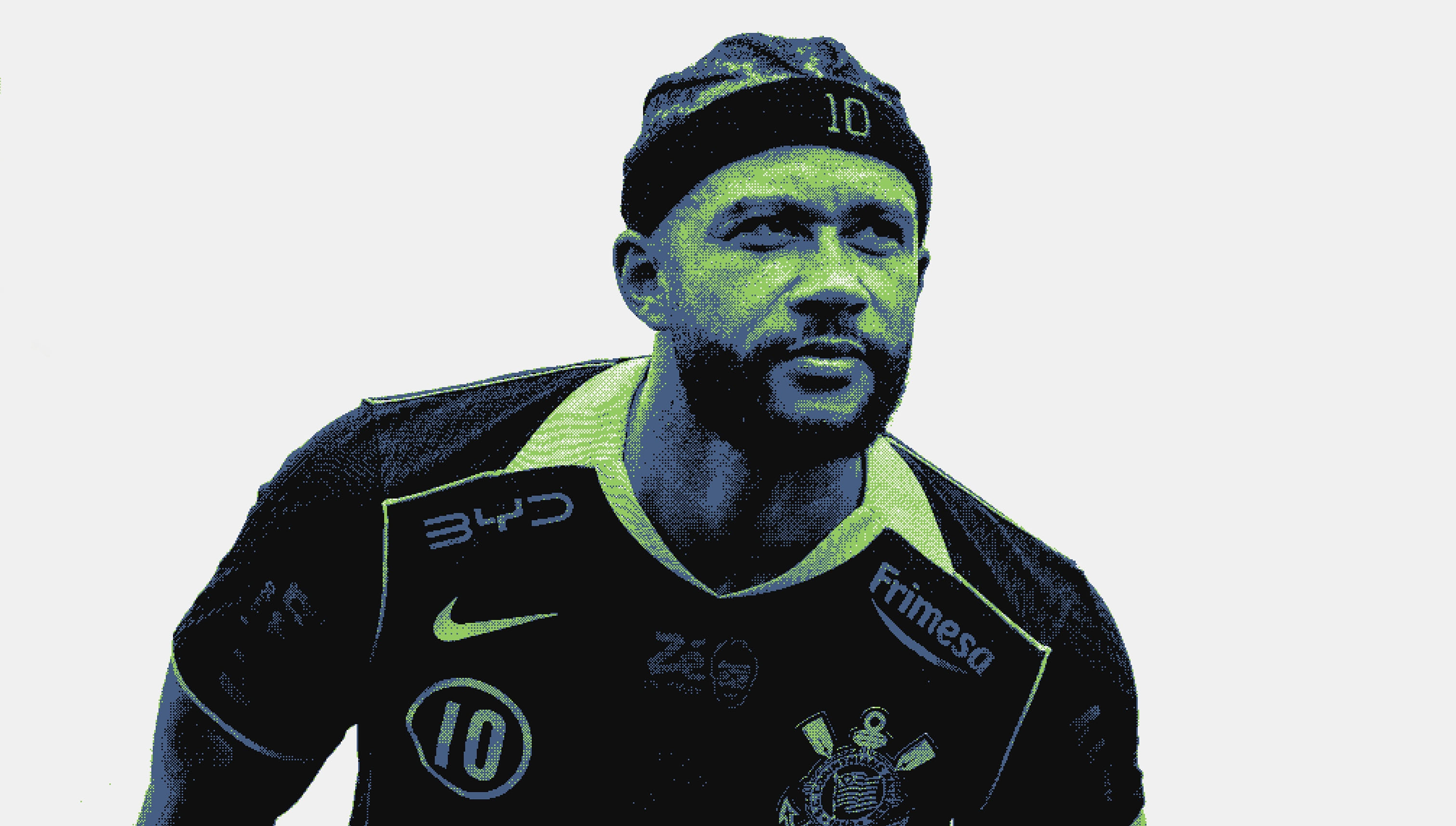
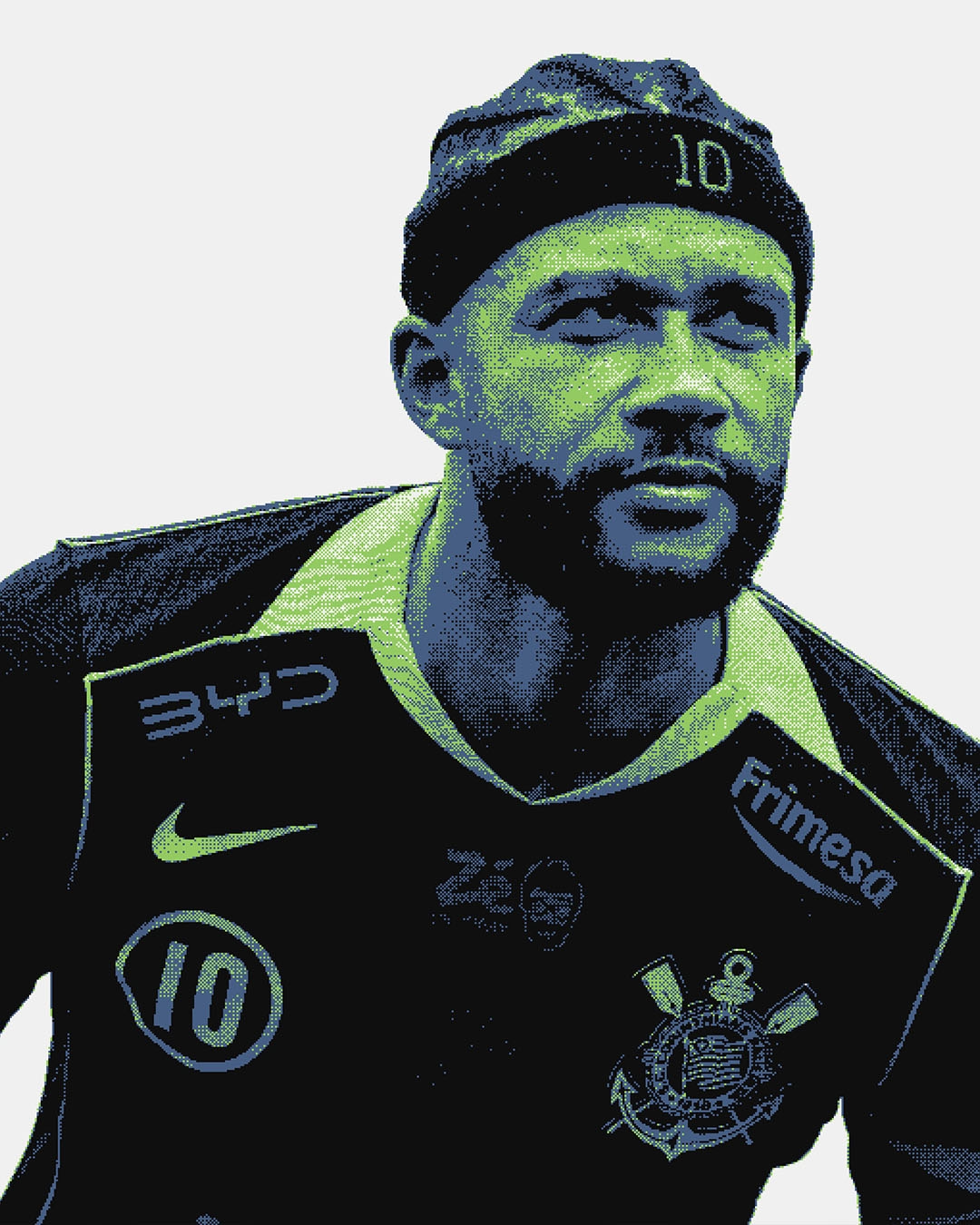
Memphis Depay has been rapping since he was a teenager, designs fashion, and works with other artists in Brazil. What was long dismissed as a distraction from football has become part of his identity. On a footballer for whom football alone was never enough.
It ends with Parque São Jorge in flames.
Memphis Depay sits in the back seat of a car, looking out the window. Behind him, Corinthians' historic clubhouse is burning. Then the music video for his new song “Don't Panic” ends.
Three days earlier, Corinthians announce they are extending Memphis' contract until July 2028. That ends months of negotiations that had seemed to collapse only days before. On August 11, the club had said it would not extend the contract for financial reasons. Memphis publicly disputes that. In the end, both sides find their way back to each other. Memphis accepts significant financial concessions.
On August 21, “Don't Panic” is released. Memphis also processes the conflict over his contract in the song, singing about a vice-president who is now his enemy. The burning clubhouse causes further outrage. Corinthians responds with an internal fine.
On August 22, Memphis responds on X. He says he wrote “Don't Panic” about four months earlier. As an artist, he says, he uses his pen to express feelings, dreams or nightmares. At the same time, he makes clear he is against any form of violence, and hopes for a peaceful outcome to a fan protest planned for that same day. It does later take place peacefully, and is directed mainly at Corinthians' leadership. Memphis stands by his interpretation of the video: it's art.
That's a word that matters to Memphis.
Music has been with him since he was a teenager. Later comes his interest in fashion. He releases songs and music videos and works with other artists.
This side of Memphis didn't emerge later. It has run alongside his football career for years.
And for a long time, that was seen as a problem.
Why Memphis Depay Rubbed Manchester United the Wrong Way
When Manchester United sign Memphis from PSV Eindhoven in the summer of 2015, one of Europe's most coveted young forwards arrives in England. He's 21, fresh off winning the Dutch title and finishing as the Eredivisie's top scorer with 22 goals.
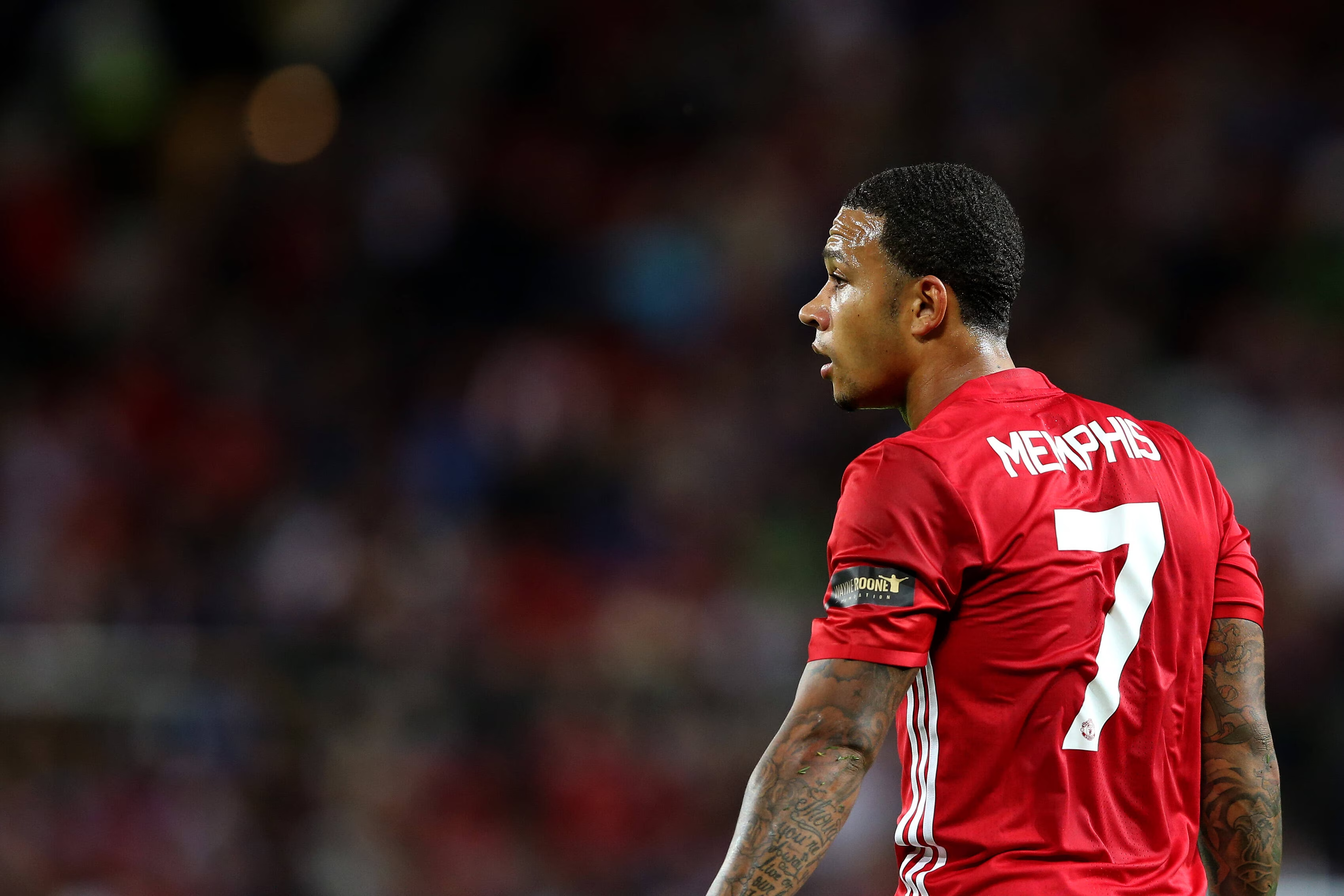
By this point, only “Memphis” appears on the back of his shirt. He deliberately doesn't carry the surname Depay. Even as a teenager, he explained that he didn't want to play under his father's name, given their difficult relationship.
Music is already part of Memphis' life too. As a teenager he raps on the way to training; at 15, he later recalls, he starts going into a friend's studio.
At United he gets the number 7, previously worn by, among others, George Best, Eric Cantona, David Beckham and Cristiano Ronaldo. After a promising start, Memphis fails to meet expectations. In 33 Premier League appearances, he scores twice.
The less there is to say about his goals, the more interesting his life off the pitch becomes.
In 2015, Memphis turns up for the Dutch national team wearing a hat and a long scarf. Dutch football coach Co Adriaanse compares him to a Peruvian pan flute player and says Memphis needs to be corrected in how he presents himself.
One of the best-known stories from this period is told by Wayne Rooney years later. After a poor performance, he says he advised Memphis to keep a low profile at a reserve-team match. Memphis, he says, showed up in a Rolls-Royce, wearing a leather jacket and a cowboy hat.
Episodes like these become part of the narrative around his struggles in Manchester. Whether his clothing choices or his interests outside football actually had anything to do with his performances is impossible to say from that alone.
Looking back, Memphis describes a different problem. In 2018, he tells Canal+ that in Manchester he had tried to be someone else, and that he wasn't happy with himself at the time.
His conclusion: “I cannot be anyone else but Memphis.”
At Lyon, he starts putting that sentence into practice.
How Memphis Depay Made Football and Music Coexist at Lyon
Olympique Lyon sign Memphis in January 2017. He stays four and a half years, scoring 76 goals in 178 competitive matches, adding 55 assists, and taking over the captain's armband. In 2020, he helps Lyon reach the Champions League semi-final.
Alongside that, Memphis keeps releasing music. “LA Vibes” comes out in 2017, with more songs following. In 2020 he releases the nine-track EP Heavy Stepper.
That's exactly what makes the Lyon years interesting for his story. His interests outside football don't disappear just so he can perform again on the pitch. Both exist side by side.
On the pitch too, Memphis develops a stronger sense of himself as a public figure. After a Champions League match against RB Leipzig in December 2019, a Lyon fan displays an offensive banner targeting defender Marcelo. Memphis runs over and tries to tear the banner down. He later criticizes parts of his own fanbase publicly. Coach Rudi Garcia backs his captain, calling his behavior that of “a real captain.”
The fact that Memphis rubs people the wrong way at Lyon too is part of the story. After his departure, sporting director Juninho criticizes him, saying the team had revolved too much around Memphis in his view, and faulting his work off the ball. Personally, Juninho stresses, he had a good relationship with him.
The difference from Manchester lies less in everyone suddenly understanding Memphis. It lies on the pitch: his music, his image and his interests carry on, while for years he remains one of his team's most important players.
In 2021, Memphis moves to FC Barcelona. After a year and a half, he moves on to Atlético Madrid, and in 2024 he leaves Europe.
Shortly before that, one accessory joins his look for good.
Just before the EURO 2024, he plays with a white headband for the first time. The look sparks debate in the Netherlands. Once again, there is discussion about why Memphis is wearing a headband at all and why his appearance beyond the game itself attracts so much attention.
Memphis explains at the time that the headband keeps sweat out of his eyes, and that he simply likes it. For the Euros opener against Poland, he wears a white version embroidered with WHO CARES – apparently a response to exactly that debate.
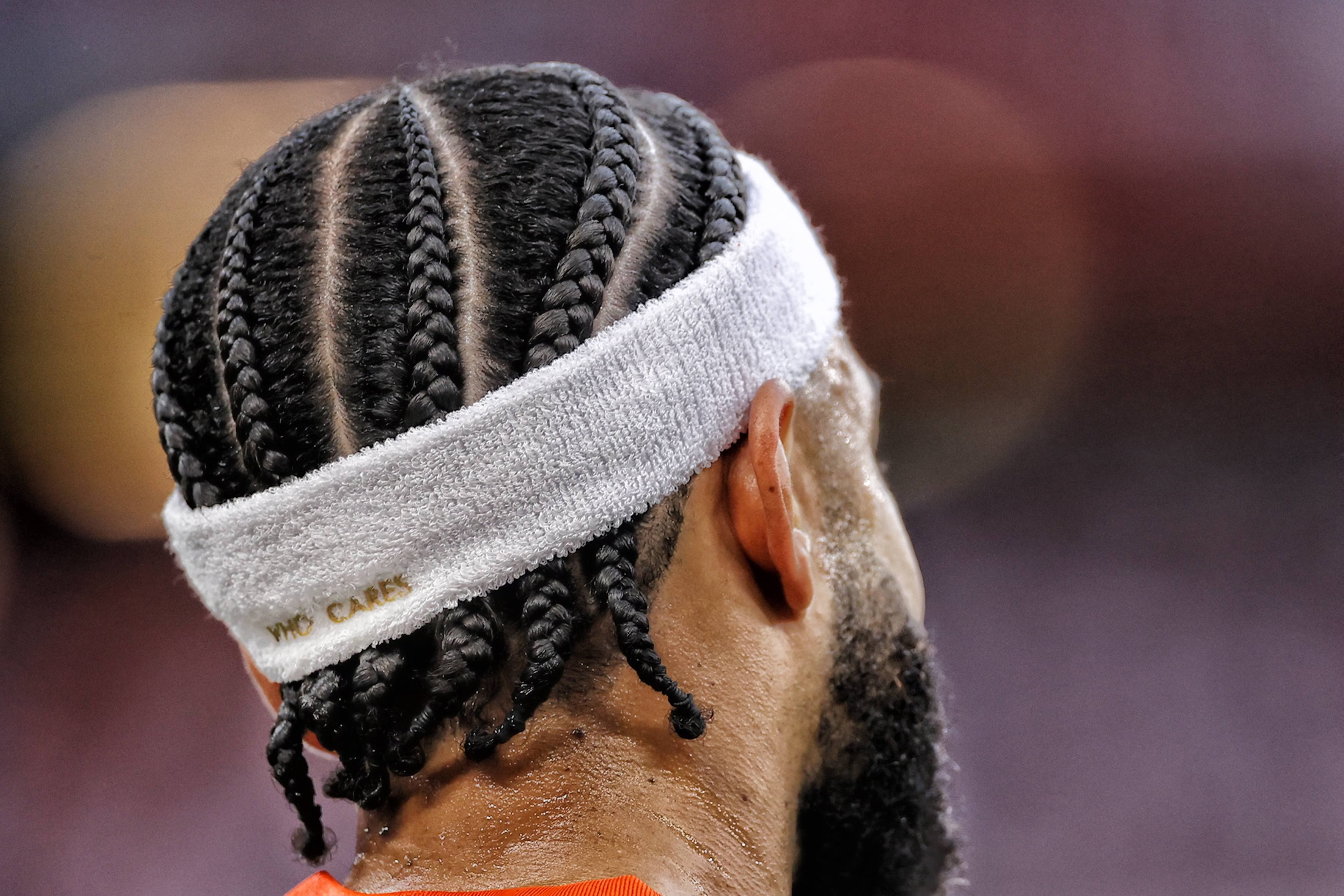
Memphis never takes the headband off again after that. It becomes a fixed part of his look, one he keeps varying: sometimes white, sometimes black, with different embroidery or his number 10. Later, he even wears custom-made headbands from the luxury brand Chrome Hearts.
Soon after, another place becomes important for his development off the pitch.
How Brazil Feeds Into Memphis Depay's Music
In September 2024, Memphis signs for Corinthians.
For a 30-year-old Dutch international leaving Europe's top leagues to join a club in São Paulo, it's an unusual move even in football terms. For Memphis, though, Brazil also marks entry into a new cultural environment.
In his interview with Hypebeast, published in June 2026, he describes the move itself as a kind of “detox” from Europe. He also says Brazil now feels like home.
That shows in his music too.
In São Paulo, Memphis meets MC Hariel. They go into the studio together and record three songs in one night. Memphis starts working Portuguese passages into his lyrics. The collaboration produces the EP Falando com as Favelas. The accompanying visuals are shot in Brazil and Ghana. Ghana is no random location for Memphis: he has Ghanaian roots, identifies as Ashanti, and maintains a personal connection to the country. Memphis later explains he wanted to draw a link between the two places.
Brazil, then, isn't just a place where Memphis continues his football career. The country flows into his music.
And music, in turn, is by now far more than something he does between training sessions.
In June 2026, Memphis tells Hypebeast that over the years, music has become a form of therapy for him. It gives him a way, he says, to express things that, as an athlete, he can't say the same way in interviews without shooting himself in the foot. He now spends many hours and his own money on studio sessions and videos.
Then he says a sentence that describes his career better than almost any job title could:
“To just play football, that's not for me.”
In the same interview, Memphis talks about fashion and his vision for life after his playing career. He says he could imagine becoming a creative director one day. He describes fashion as a creative habit that has long been part of his life. In 2020, he launches his own clothing label, Memphis Depay Clothing (MDC). Its sub-label BADTTW – “Blind and Deaf to the World” – traces back to his trademark goal celebration, fingers in his ears.
How the View of Memphis Depay Has Changed
What's interesting here, too, is how differently football now looks at a player like Memphis.
In 2015, a hat, a scarf or a Rolls-Royce could spark a debate about his professionalism. In 2024, people are still talking about his headband. Eleven years after Manchester, Hypebeast puts Memphis on a digital cover precisely because of the combination of football, music and fashion, introducing him in the subhead as “Footballer, rapper, designer.”
He didn't invent this combination. Footballers made music and got into fashion long before him. But Memphis is one of the players whose career shows, over the years, just how much the perception of those interests has shifted.
He notices it himself.
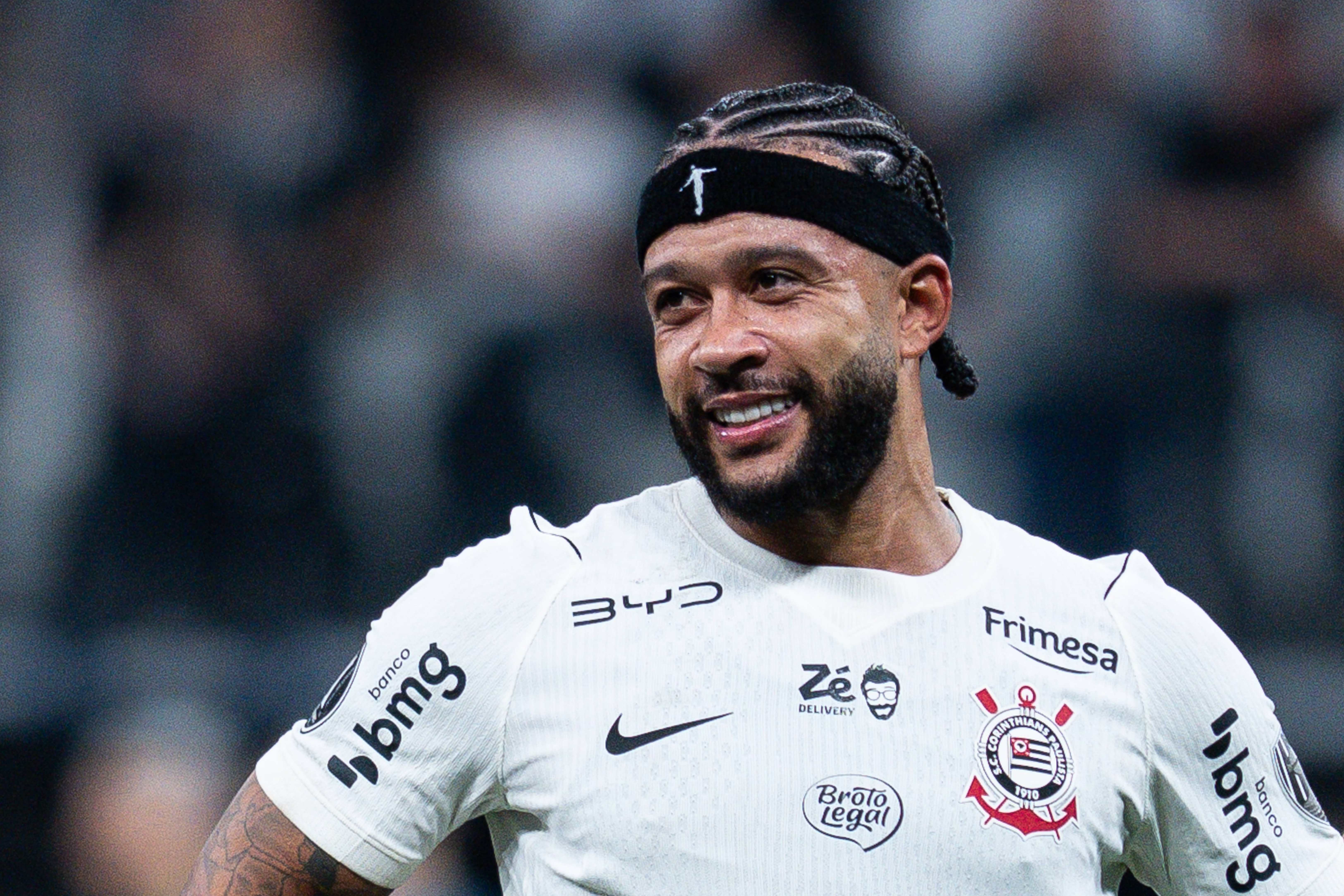
In the Hypebeast interview, Memphis recalls a coach once being asked at a press conference about his music, and essentially suggesting he needed to choose one or the other. Today, Memphis says, interests like his are more accepted; ten years ago, there was only backlash.
The digital cover itself is a good example. There, Memphis doesn't have to defend his different roles against one another. Footballer, musician and fashion figure stand side by side.
Acceptance, though, doesn't mean everything that comes out of it has to be accepted too.
Why Memphis Depay's Music Turns Into a Conflict at Corinthians
That's exactly what makes “Don't Panic” more interesting for this story than just another music project from Memphis.
Just months before its release, he had explained that music gives him a way to say things he can't say the same way within football.
Now he does exactly that.
The conflict with Corinthians doesn't stay confined to contract talks. It ends up in a song. Memphis sings about a vice-president who is now his enemy. Corinthians treats the video as a breach of his obligations to the club and sanctions him internally.
In his response, Memphis places two things side by side: his love for Corinthians, and his claim to being allowed to process the preceding conflict as an artist.
When Hypebeast asks him in June how people should look back on his career in ten or twenty years, Memphis talks about his goalscoring record for the Dutch national team, and about how it too will eventually be broken. What he hopes will remain is the memory of someone who brought his own style and stayed true to himself.
For years, there was debate over whether Memphis was too preoccupied with things that had nothing to do with football. Today, he barely has to explain why he makes music anymore.
At Corinthians, it's now about something else entirely: what he says in it.
