



















A perm, a moustache, a mullet: what was everyday life four decades ago is back on the pitch in 2026. But similar looks now tell a different story. Why footballers are starting to look like their predecessors.
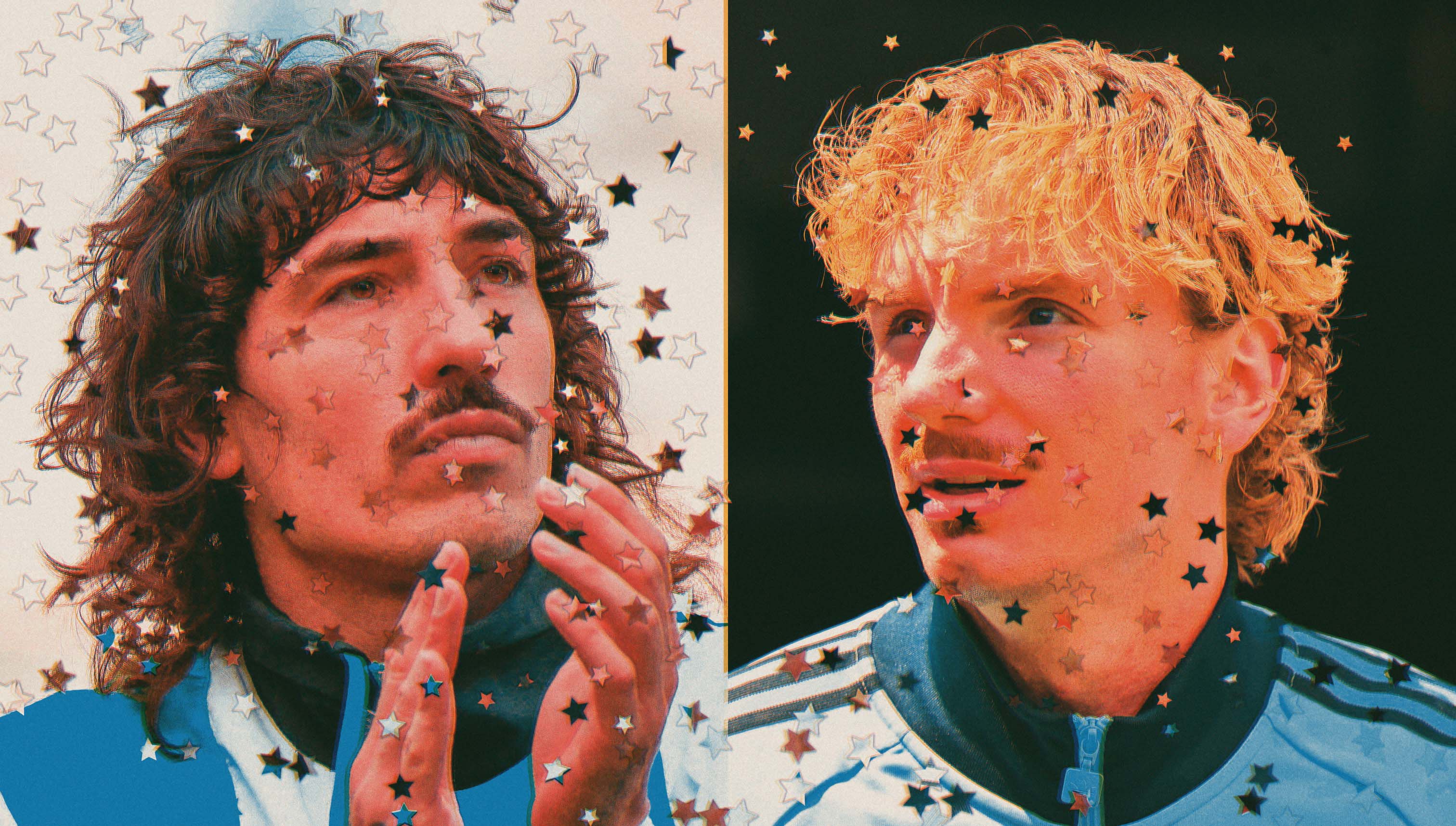
July's transfer news barely made a ripple, sportingly speaking: AC Monza, freshly promoted to Serie A, signed left-back Ricardo Mangas on loan. What made the move travel far beyond Italy had little to do with football, and everything to do with how he looks: Mangas wears a curly mullet and a moustache.
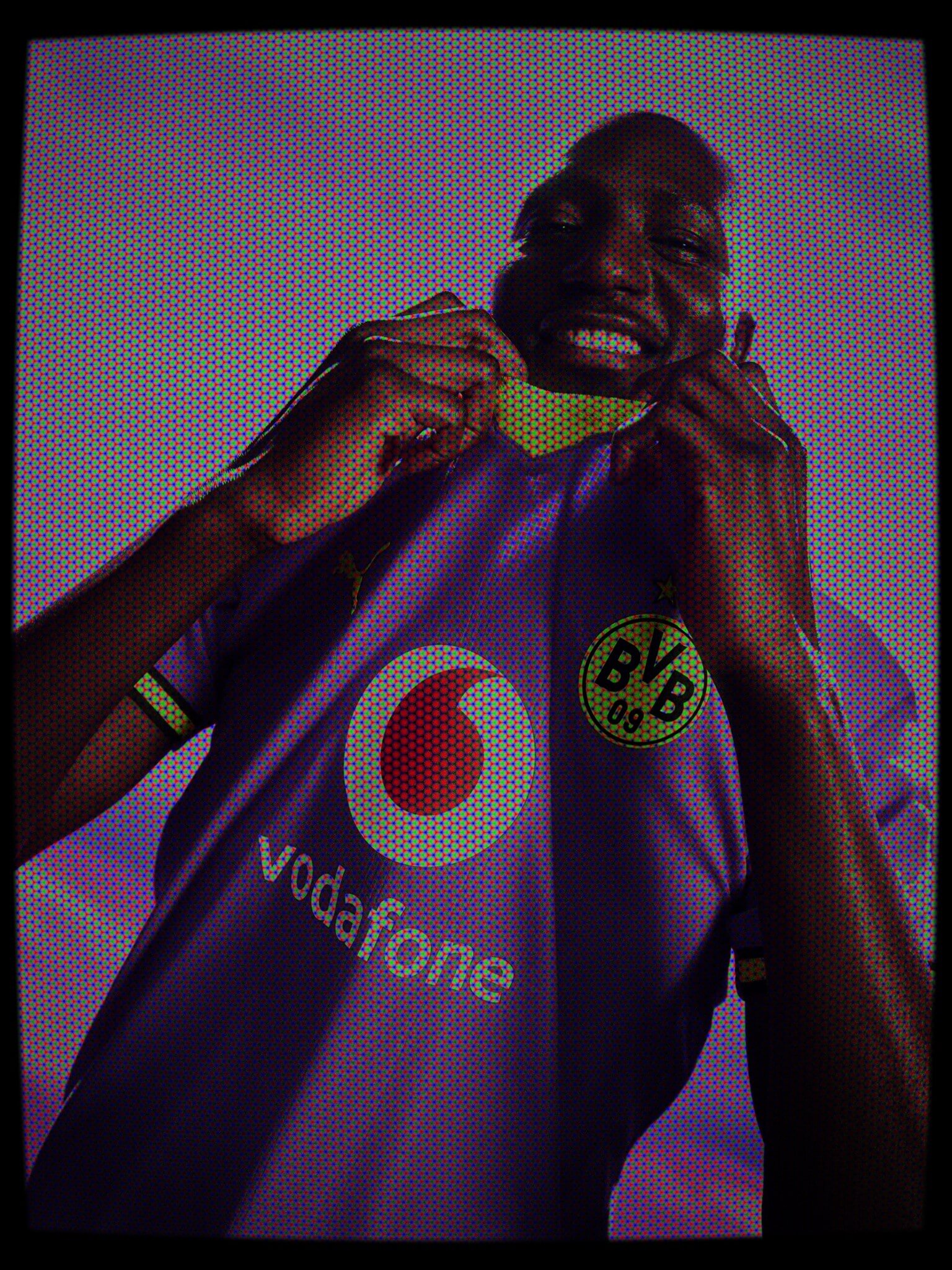
Monza's social channels leaned into it, announcing the transfer in red neon type clearly inspired by the Stranger Things logo, with "AC Monza presents" hovering above a low-angle portrait against a blue sky.
Mangas looks like someone photographed him forty years ago, except the photo isn't from an archive. It's from now.
Fans piled on in the comments, comparing the Portuguese defender, previously at Sporting Lisbon, to everything eighties pop culture has to offer, from David Hasselhoff to Colombian goalkeeping legend René Higuita. One user asked dryly whether Monza had signed him for his football or his engagement numbers.
Why does a haircut and a moustache make an entire era instantly recognisable? And why are footballers suddenly wearing looks we associate so precisely with that particular past?
Rudi Völler and Football's Eighties Hair
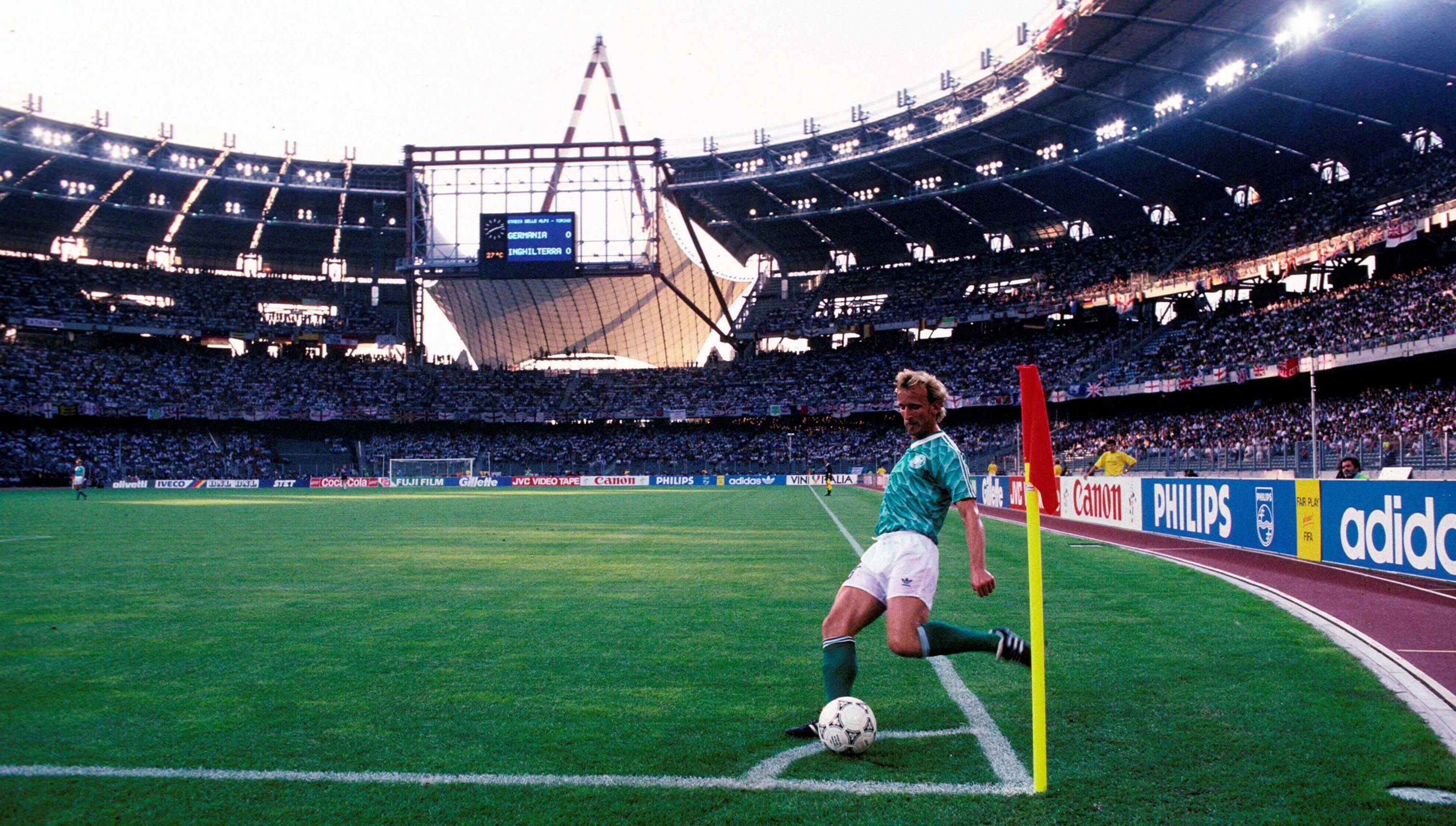
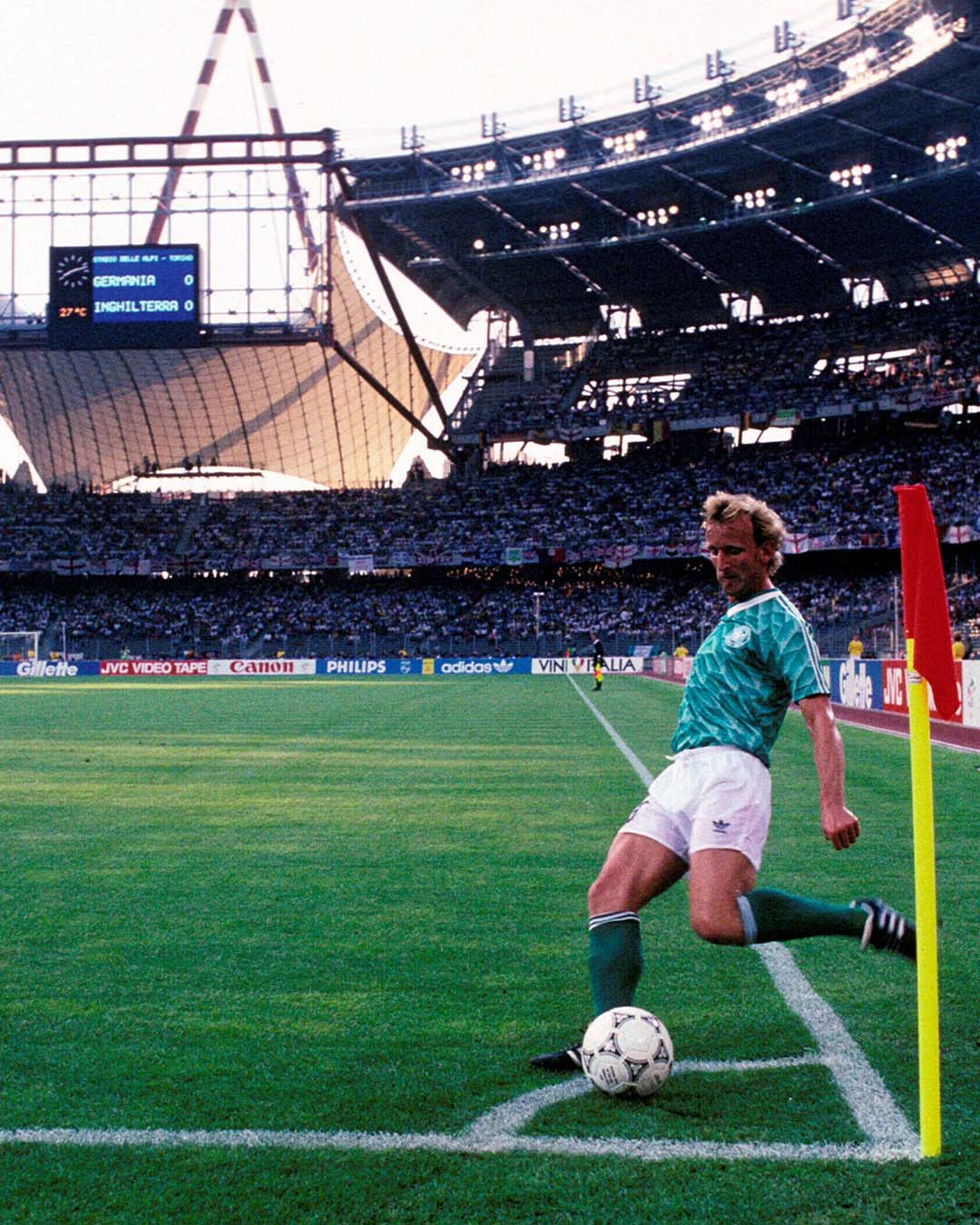
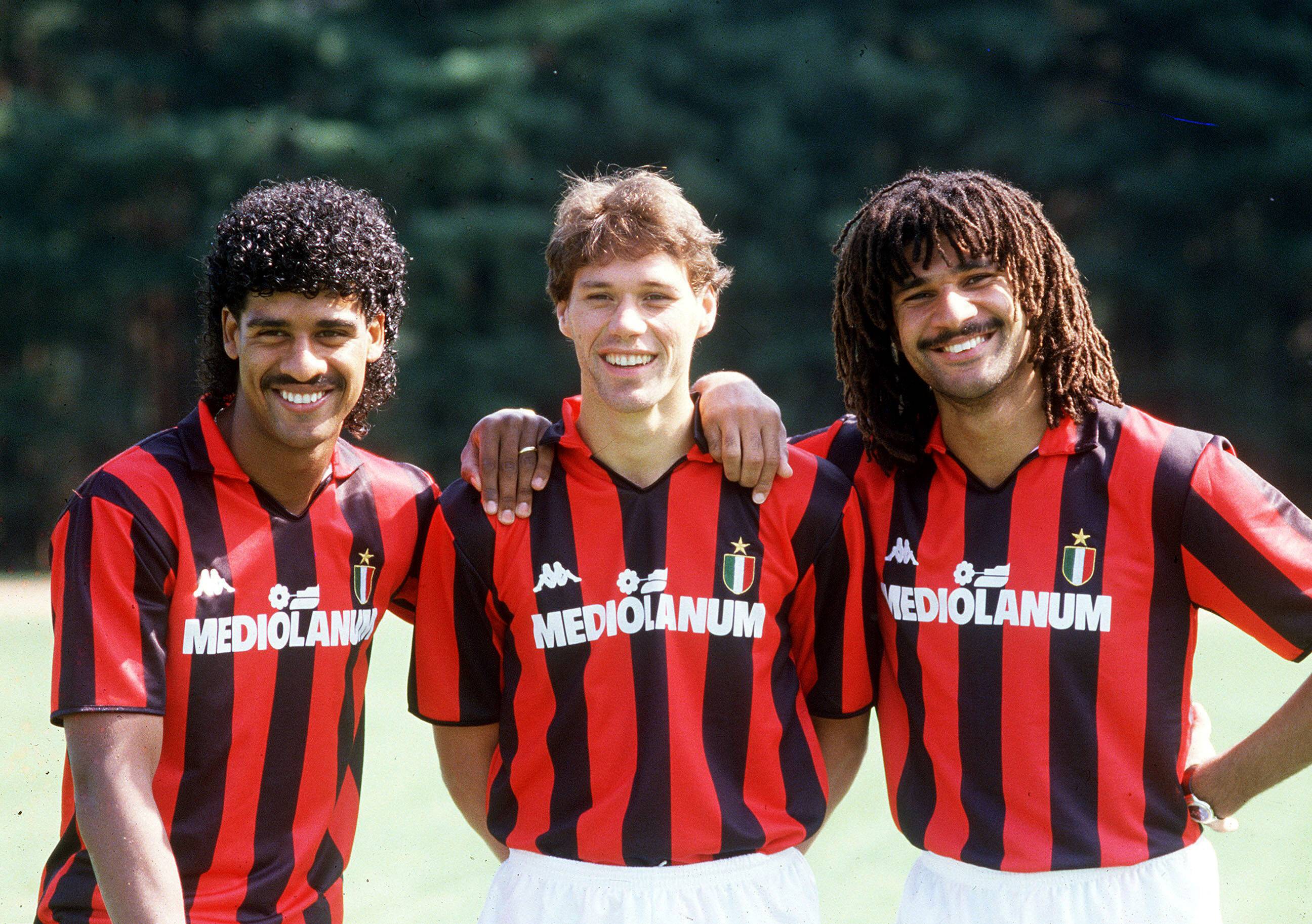
To understand that, it helps to look back first. Perms, mullets, moustaches and big hair weren't invented by football. They belonged to the pop culture of the time, present in music, film and fashion, and naturally on the pitch too. What reads today as unmistakable iconography of a bygone football era was, back then, simply the present.
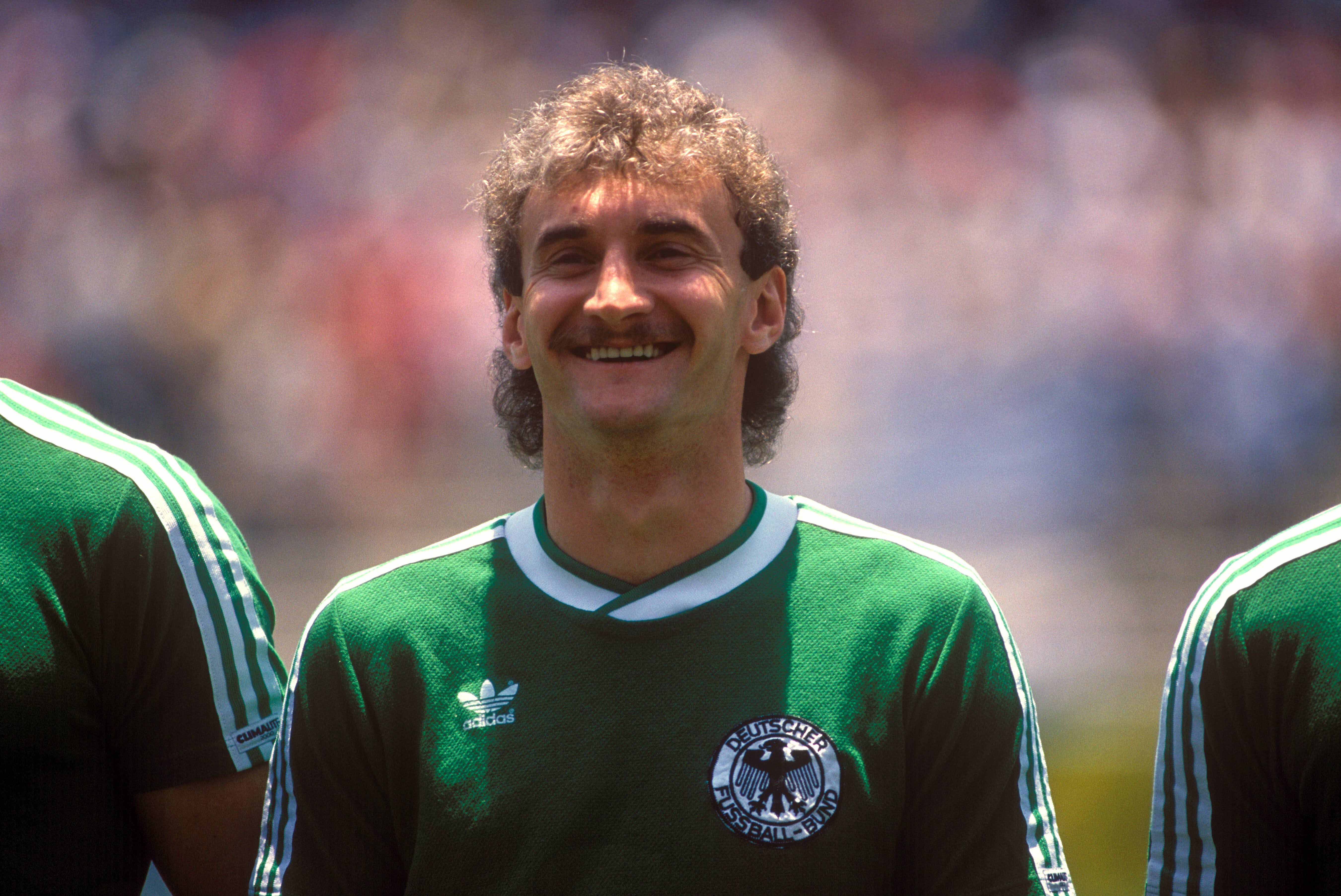
Rudi Völler's perm was almost the textbook case. It belonged to the fashion of the eighties, on the pitch as much as off it. His full, curly, prematurely greying hair earned him the nickname "Käthe" from his national team colleague Thomas Berthold, a joke the German press quickly upgraded to "Aunt Käthe."
How tightly that silhouette became bound up with German football of the era shows in an unlikely place: Denmark. There, a mullet is still called “Bundesligahår”, literally "Bundesliga hair." Denmark's official language authority traces the term to the fact that so many German footballers wore the cut in the eighties, and names Völler as its most prominent example. Carlos Valderrama's mane and Ruud Gullit's dreadlocks, both figures whose most defining years reached well into the nineties, became similarly inseparable from the players themselves over time.
Paul Breitner's afro and beard became part of his rebellious image in the seventies, proof that appearance could carry more than mere zeitgeist even back then. In 1982, he trimmed his signature full beard for an ad campaign by aftershave brand Pitralon. Even then, looks could carry attitude, and even then, that attitude could be sold.
The eighties looked backward too, but their most iconic football looks were, above all, contemporary aesthetics.
Four decades on, the relationship to the past has shifted. The seventies are being rediscovered, the eighties quoted, the nineties and Y2K revived. What was once simply the zeitgeist has itself become material for a new one.
From Héctor Bellerín to Jackson Irvine to Ricardo Mangas: The 80s Comeback
And so, distinctive silhouettes that seemed to belong to another era are making their way back onto the pitch.
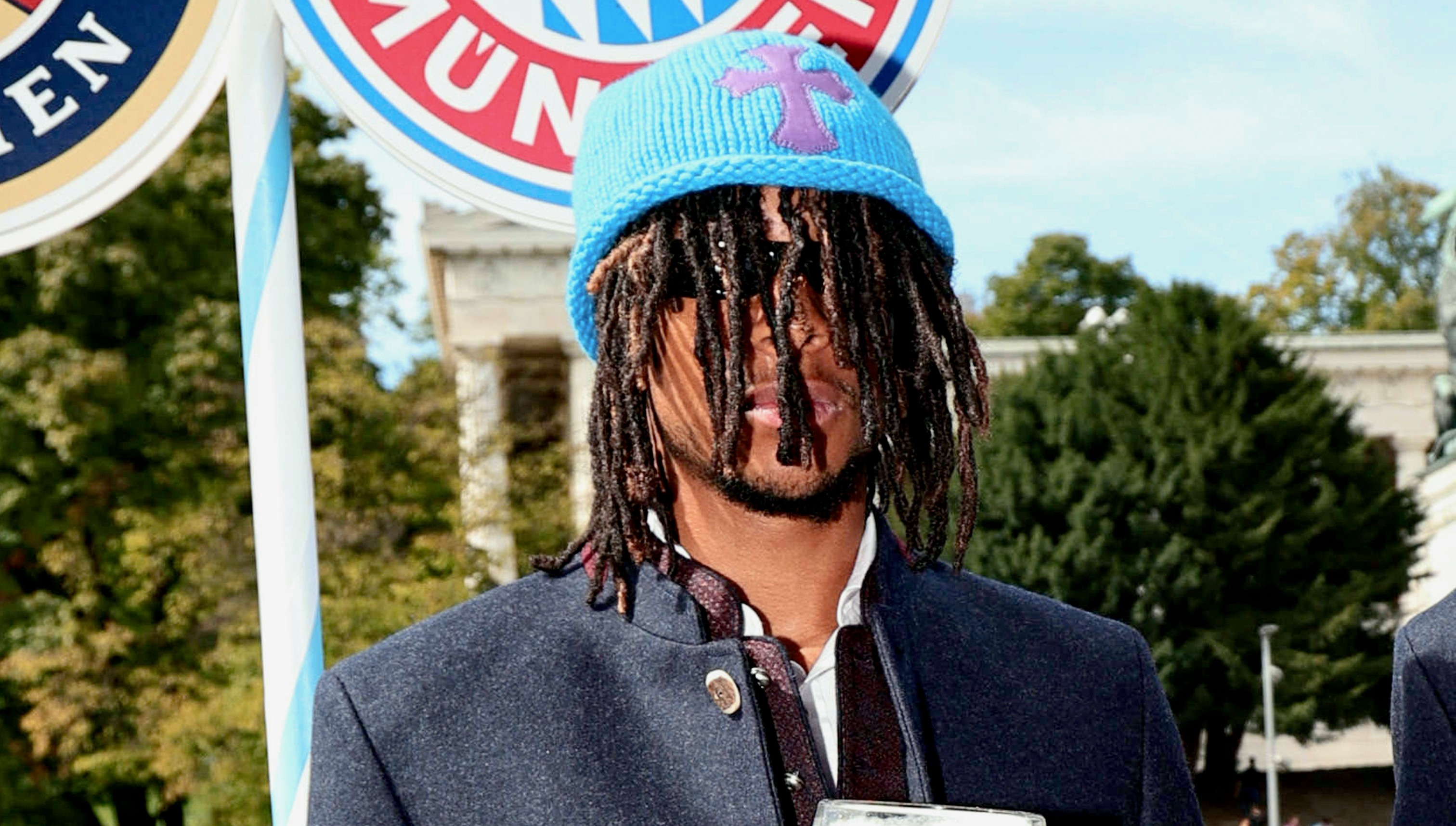
Héctor Bellerín has been celebrated by fashion magazines for years and once walked the runway for Louis Vuitton. Ferran Torres now wears his hair down to his neck, after a noticeably shorter cut defined his look as recently as last year, his transformation, dubbed a "glow-up" online, was widely discussed during the World Cup. Riccardo Calafiori's long mane evokes Italy in the nineties more than the eighties. Jackson Irvine wears his hair loose, tied back, or dyed purple, alongside regularly painted nails. And Ricardo Mangas is bringing the eighties back in close to pure form, curly mullet, moustache and all.

These are different looks from different reference points. What unites them is a break from the polished uniformity, all skin fades and sharp beard lines, that has defined the modern footballer's image in recent years.
Isolated cases? Maybe. What's more interesting is the cultural moment they're appearing in.
Why Vintage Fashion Is Shaping Football Too
Vintage fashion is booming, secondhand platforms are growing, and old football shirts are being worn as streetwear. Germany forward Nick Woltemade told British GQ earlier this year that he loves browsing vintage stores and hunting for older pieces on Vinted, though not under his real name.
The generation playing professional football today moves through a fashion and pop culture in which past decades have long since become part of the present's aesthetic toolkit.
That Monza reached for Stranger Things imagery specifically for Mangas is more than a clever social media gag. A show that itself plays with eighties aesthetics supplies the visual language for a footballer whose entire look is instantly tied to the same era.
Of all things, the mullet, Mangas's trademark and once the epitome of dated football style, is now on fashion academia's radar. "I think we're at a time right now where the mullet is resurfacing and reinventing itself," fashion historian Frances McSherry told Northeastern Global News. She traces its return partly to gender codes: because the cut blends elements of men's and women's fashion, it can read as subversive.
Applied to football, that fits an aesthetic visibly breaking with long-standing convention, part of a broader mood in which retro itself has become the present again.
How Héctor Bellerín and Jackson Irvine Wear Personal Style
Still, 2026 isn't 1986.
While many of the era's iconic looks were, at first, simply part of their contemporary moment, today's footballers talk openly about what their appearance means to them. The stories differ, but taken together they point to a shift: for some players, personal style has become a visible part of their identity.
Speaking to MUNDIAL, Héctor Bellerín traced his style back to his family and his years in London. His grandmother made clothes, his mother followed in her footsteps, and fabric and materials were part of home life. He'd always wanted to be a little different, he said, and London had a huge influence on that.
Jackson Irvine, meanwhile, told SoccerBible how he was repeatedly told at earlier clubs to cut his hair and stop wearing colourful boots. "If I'd turned up with painted nails, I probably would have got sacked," he said. At St. Pauli, he later became captain and a cult figure with that same appearance.
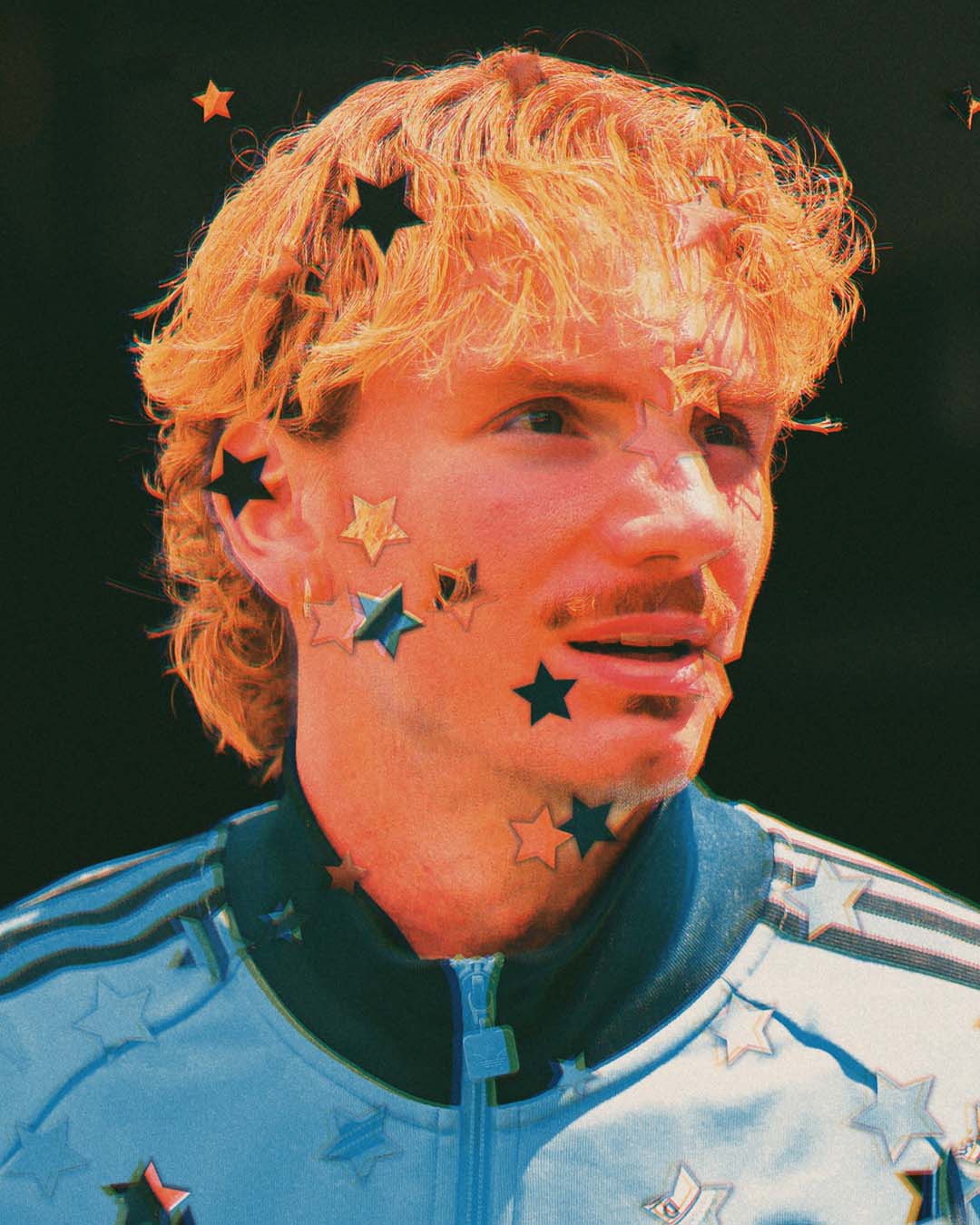
In the same GQ interview, Woltemade spoke about his own look. "I think being recognisable is good," he said, pointing to his height and his longer hair. He brought up the historical comparison himself: "You know Rudi Völler? Everyone is comparing me to him."

The pattern here is less about rebellion than about normality. Not every unusual style is a statement, and not every mullet is a conscious eighties reference. But for at least some players, treating clothing, hair and appearance as an expression of personality has simply become second nature.
That shifts what a footballer's appearance can signal. Long hair, painted nails or vintage clothing no longer sit automatically at odds with the image of a professional. The return of older aesthetics meets a generation of players with more room to express themselves.
When Retro Kits and Football Nostalgia Become Business
This shift doesn't stop with the players. Sportswear brands are relaunching historic kits, retro elements are showing up in current designs, and clubs are deliberately reaching for the visual language of past decades in campaigns and launches.
Behind it lies a broader longing for a past that, in hindsight, feels more authentic and less commercialised than today's game. Whether that memory holds up to reality is another question. Nostalgia flatters, which is exactly why it works so well. And there's a real irony here: modern, heavily commercialised football is now selling the longing for a time before its own gloss. The past isn't just remembered, it's relaunched, staged and sold.
Which means the same look can mean several things at once in 2026: personal taste, an expression of individuality, a current trend, a historical reference and a marketing tool.
Nick Woltemade and Rudi Völler: Similar Looks, Different Stories
Just how naturally these layers now overlap became clear around the World Cup this summer. Googling “Nick Woltemade” brought up the suggestion "Did you mean: Rudi Völler?", and it worked the other way round too. Google was picking up on a comparison fans had already been joking about for months.
Woltemade himself knows the reference and seems comfortable with it. Völler, for his part, took the comparison with humour too. At a DFB press conference, he joked that Woltemade no longer looked quite as much like him because his own hair had become a little thinner on top, but conceded that there was certainly a resemblance to his younger self.
That's where the real difference between then and now becomes clear. Völler's perm was, in the eighties, simply part of the aesthetic of the moment. Woltemade's look feels instantly familiar four decades later precisely because Völler and his generation already loaded that silhouette with meaning.
Anyone wearing a mullet, a long mane or a moustache today is operating in a different cultural space. You can wear a mullet because it happens to be back in fashion, and still summon images of the footballers who wore it before it was retro at all.
Whether this turns into a genuine 80s revival in football, or the era's most striking figures remain a stylish minority, is still unclear. Maybe the mullet fades out again. Maybe the next trend replaces moustaches and manes altogether.
Or perhaps it's less football itself standing on the edge of an eighties revival than the culture it's part of. Football is, in essence, doing what it always did: reflecting the aesthetics of its own present. It's just that the present has now rediscovered its own past.