




















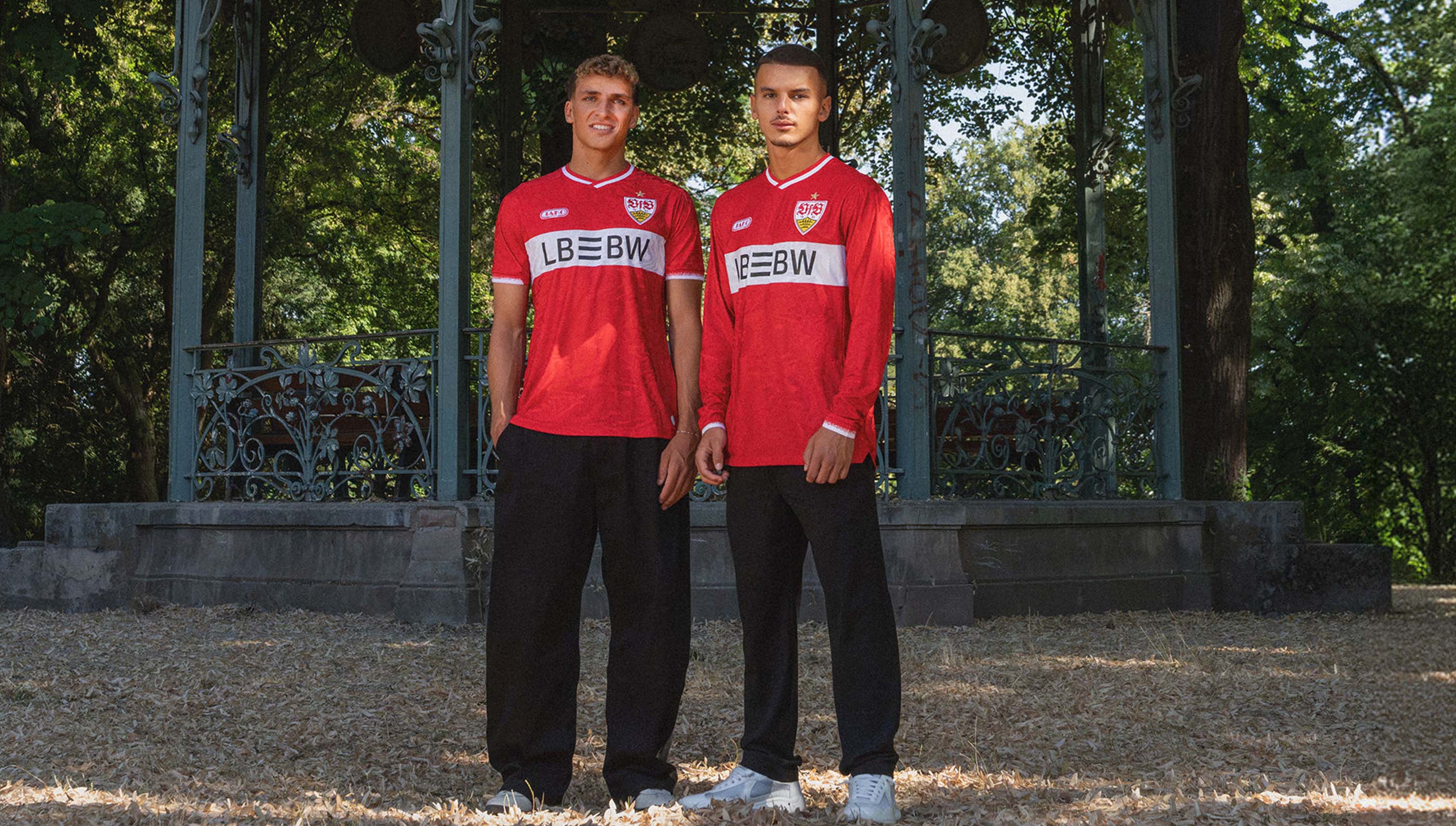
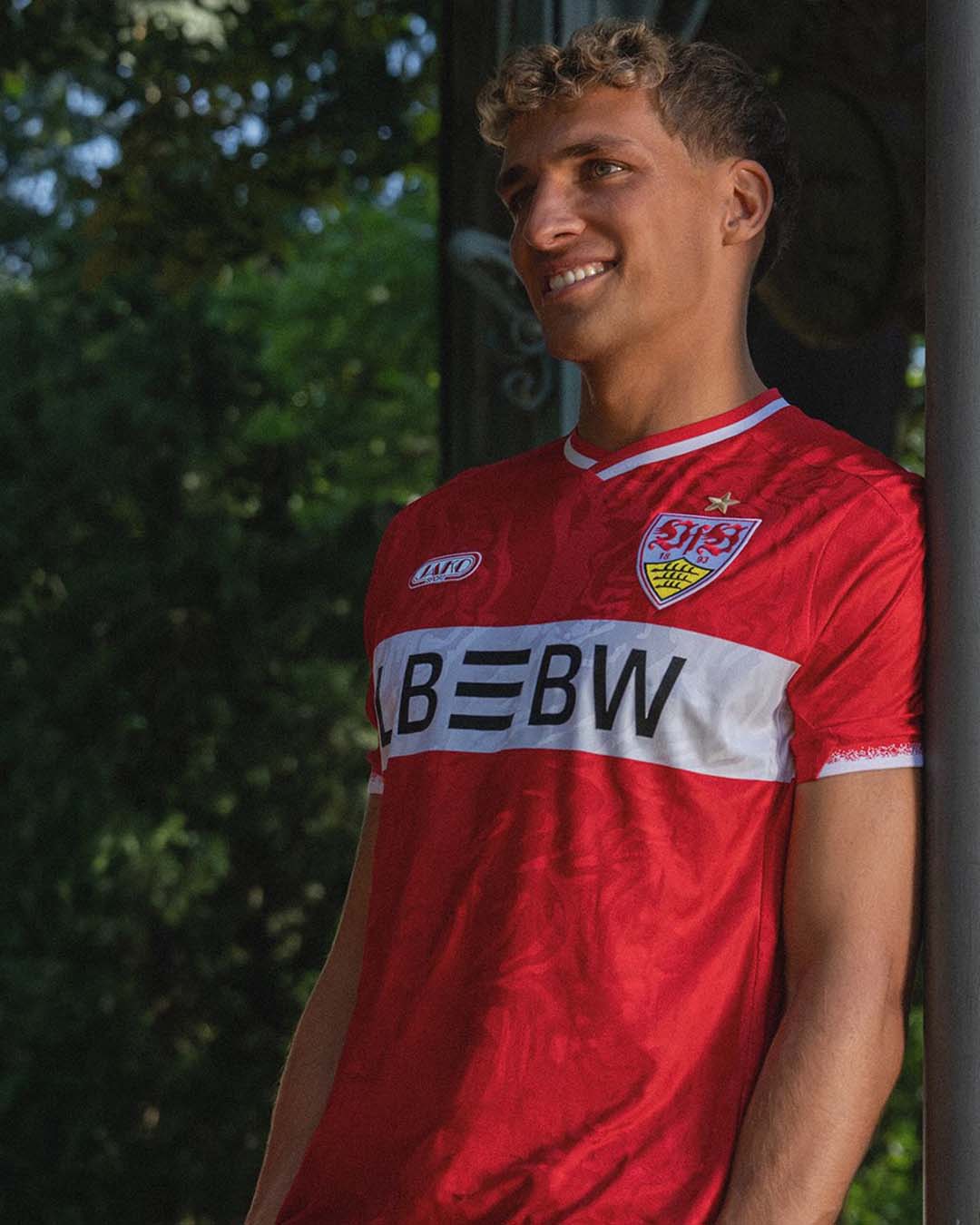
A red and white chest band, a retro crest and a weave pattern drawn from the mineral water: VfB Stuttgart's new away shirt completes their three-part tribute to Bad Cannstatt, their home district.
VfB Stuttgart have unveiled their new away shirt for the 2026/27 season, completing a trilogy: after the home shirt and the third shirt, it's the third shirt the club, together with kit supplier JAKO, has dedicated to the district of Bad Cannstatt. “Cannstatt Colours” is the name of the concept, and with the away shirt, it carries home quite literally out into the world.
VfB away shirt 2026/27: red and white with a chest band and retro details
The base is red and white, doubly meaningful for VfB: they're both the club's colours and the city colours of Cannstatt, joined by the classic chest band. The retro feel comes through in the details: the embroidered crest is deliberately larger, the white and red collar nods to past decades, and JAKO replaces its usual shoulder dots with its retro logo.
The finest detail sits in the fabric itself: the weave pattern is inspired by the minerals in Cannstatt's water, a reference with real substance, since Bad Cannstatt holds Europe's second-largest mineral water reserve after Budapest. The district's coat of arms sits on the back, and the campaign was shot, fittingly, in a historic water reservoir.
Bad Cannstatt: Stuttgart's oldest district as a shirt's theme
Cannstatt was first documented around the year 700 and is considered Stuttgart's oldest district. For VfB, the connection runs deep: since its founding in 1893, the club has been based here almost exclusively, with the club's history unfolding among Cannstatt landmarks from the Kurpark to the Wilhelma to the Wasen. “With this away shirt, we always carry a piece of our home with us, visible to everyone,” says Karsten Petry, VfB's Marketing and Sales board member.
The away shirt is available now, online and in VfB's fan shops at the stadium, in Stuttgart city centre and at the Breuningerland in Ludwigsburg. It's made largely from recycled materials.